

Views: 0 Author: Site Editor Publish Time: 2026-04-21 Origin: Site


How do 3 way ball valves manage flow in complex systems? Many industries depend on them to control direction, mixing, and switching.This article explains how 3 way ball valves work and why they are important. You will learn their structure, flow functions, and how to select the right valve for different applications.
A 3 way ball valve is a quarter-turn valve designed to control fluid flow between three ports within a single body. Unlike a standard valve that only opens or closes flow, this design allows redirection, mixing, or switching of media. This capability makes 3 way ball valves highly useful in systems that require flexible flow control without complex piping layouts.
The working structure remains simple but highly effective. Inside the valve body, a rotating ball contains a specially designed passage. When the valve rotates, the internal channel aligns with different ports. This alignment changes the flow direction instantly. This design provides reliable performance while keeping operation easy to understand.
Key structural components include:
Valve body
The outer housing supports pressure and connects to pipelines. Material selection affects corrosion resistance, strength, and durability. Stainless steel suits industrial use, while UPVC works well in chemical or water systems.
Ball with L port / T port
The core element determines flow behavior. L-port and T-port designs define whether the valve diverts or mixes flow. Precision machining ensures smooth rotation and tight sealing.
Actuator or handle
Manual handles allow simple control. Electric actuators enable automation and remote operation. Motorized control improves accuracy in industrial systems.
Three ports configuration
Three openings allow multiple flow paths. One port may act as an inlet, while others serve as outlets depending on system design.
In many systems, controlling flow direction requires more than simple on/off control. Traditional setups use multiple 2-way valves to achieve similar results. However, this approach increases system complexity and introduces more potential failure points.
Using 3 way ball valves offers clear advantages:
Reduced system complexity
A single valve replaces multiple components. Simplified piping reduces design challenges and installation time. System layout becomes cleaner and easier to manage.
Lower risk of leakage
Fewer connections mean fewer sealing points. Reduced fittings decrease the chance of long-term leakage issues. Improved reliability benefits both industrial and residential systems.
Space and cost efficiency
Compact valve design saves installation space. Lower component count reduces material and labor costs. Maintenance becomes easier due to fewer parts.
To better understand the difference, see the comparison below:
| Factor | Multiple 2-Way Valves | 3 Way Ball Valves |
|---|---|---|
| Number of components | Higher | Lower |
| Installation complexity | More complicated | Simplified |
| Leak risk | Increased due to more joints | Reduced due to fewer joints |
| Space requirement | Larger system footprint | Compact design |
| Maintenance effort | More components to service | Easier maintenance |
KLD integrates these advantages into its 3 way ball valves product range. Multiple material options, compact structures, and actuator compatibility allow flexible use across applications such as water systems, automation equipment, and industrial pipelines. This approach helps engineers achieve efficient flow control without unnecessary system complexity.
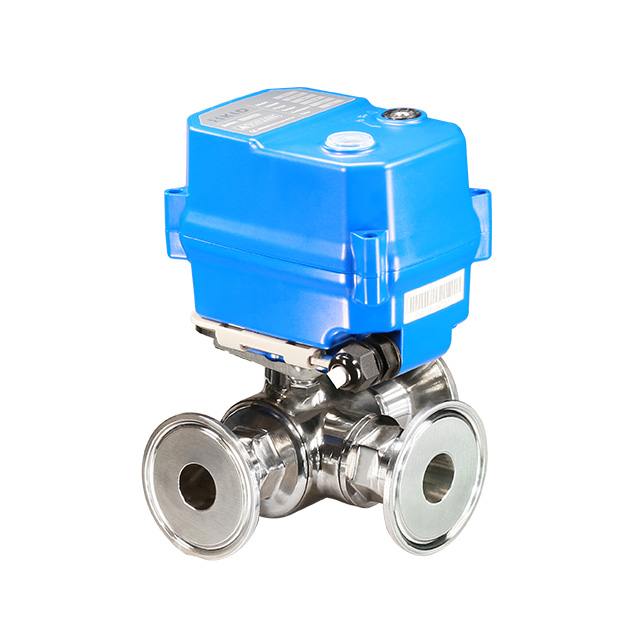
A 3 way ball valve works through a simple rotation mechanism. We turn the valve by 90 degrees. Inside, a hollow ball with bore rotates at the same time. The ball has an L‑port or T‑port passage. Rotation aligns the bore with different ports, instantly changing the flow path. The system reacts fast, without delay or complex movement.
The internal structure controls everything. The ball sits tightly inside the valve body. Precision sealing prevents leakage during operation. As rotation happens, the internal channel aligns with different ports. This alignment decides where the fluid goes.
Key working elements include:
Quarter-turn rotation mechanism
A 90-degree turn completes the full action. This short movement allows fast switching. It also reduces wear compared to multi-turn valves. Less movement leads to longer service life in most systems.
Internal ball with flow passage
The ball contains either an L-port or T-port channel. This internal shape defines flow behavior. Smooth machining ensures stable sealing performance. Proper design prevents pressure loss during operation.
Port alignment controls flow direction
When the ball rotates, different ports connect. Some ports open while others close. This creates controlled flow paths inside the valve. Direction changes without stopping the system.
To visualize the working positions:
| Ball Position | Connected Ports | Flow Behavior |
|---|---|---|
| Position 1 | Port A → Port B | Straight flow |
| Position 2 | Port A → Port C | Flow diversion |
| Position 3 | Port B ↔ Port C | Alternate flow switching |
| Position 4 | All ports connected | Mixing or splitting (T-port) |
This simple rotation mechanism explains why 3 way ball valves remain reliable in many systems. Fewer moving parts reduce failure risks.
A major advantage of 3 way ball valves lies in flow flexibility. One valve performs multiple control functions. This reduces system complexity and improves efficiency.
Common flow functions include:
Diverting flow
One inlet connects to one of two outlets. The valve selects the direction based on position. This setup works well in systems needing alternate flow paths. Equipment can switch between pipelines without adding extra valves.
Mixing flow
Two inlet streams combine into one outlet. The internal T-port design allows this function. Mixing helps in temperature control or fluid blending processes. Stable flow ensures consistent output quality.
Switching between flow paths
Flow alternates between two lines. The valve isolates one path while opening another. This function supports backup systems or parallel pipelines. Switching remains quick and efficient.
Operation method plays an important role in how 3 way ball valves perform. Both manual and motorized control options offer different benefits depending on system needs.
Manual handle operation
A simple handle controls valve rotation. Operators can quickly switch flow direction. This approach suits small systems or low-frequency operation. Maintenance remains easy due to minimal components.
Motorized actuator control
Electric actuators automate valve movement. Remote control becomes possible in complex systems. Consistent positioning improves flow accuracy. Integration into control systems enhances efficiency.
Automation advantages in industrial systems
Automated valves reduce human error. System response becomes faster and more reliable. Continuous operation improves production stability. KLD motorized 3 way ball valves support this approach through compact design and actuator compatibility.
Material selection plays a critical role in how 3 way ball valves perform in real systems. Different materials affect corrosion resistance, pressure capacity, and service life. Choosing the correct material ensures stable operation under specific working conditions.
Common material options include:
Stainless steel construction
Stainless steel offers high strength and strong corrosion resistance. It performs well in high-pressure and high-temperature environments. Industrial systems, chemical processes, and gas pipelines often rely on this material.
Brass valve bodies
Brass provides good durability and moderate corrosion resistance. It works well in water systems and HVAC applications. Cost remains lower compared to stainless steel, making it suitable for general-purpose use.
Plastic and UPVC materials
Plastic valves resist chemical corrosion effectively. They perform well in water treatment and chemical handling systems. Lightweight structure also simplifies installation and reduces system load.
Actuation defines how 3 way ball valves operate and integrate into a system. Control methods range from manual operation to fully automated solutions. Selection depends on system complexity and control requirements.
Key control options include:
Electric actuators and automation
Electric actuators rotate the valve automatically. Remote control becomes possible through control systems. This improves efficiency in industrial automation and continuous processes.
Limit switches and position feedback
Limit switches provide position signals. Operators can monitor valve status in real time. This improves system safety and control accuracy.
Fail-safe and manual override features
Fail-safe functions ensure safe positioning during power loss. Manual override allows operation during emergencies. These features improve reliability in critical systems.
Connection type affects how 3 way ball valves integrate into pipelines. Proper connection selection ensures sealing performance and installation efficiency. Different systems require different connection standards.
Common connection types include:
Threaded connections
Threaded valves are easy to install and remove. They suit small systems and low-pressure applications. Maintenance becomes simple due to detachable design.
Flanged connections
Flanged valves provide strong sealing under high pressure. They are widely used in industrial pipelines. Installation requires more space but ensures stable performance.
Tri-clamp and union connections
Tri-clamp connections support sanitary applications. Quick assembly allows easy cleaning and maintenance. Union connections enable fast disassembly without cutting pipelines.
Additional design considerations:
Compact and mini valve designs
Space-saving structures help in tight installations. Mini valves suit equipment integration and compact systems. Reduced size does not compromise performance when properly designed.
Installation considerations for different systems
System layout determines valve orientation and connection type. Pressure, temperature, and media type influence installation decisions. Proper alignment prevents leakage and ensures long-term stability.
KLD offers multiple connection styles in its 3 way ball valves, including compact designs and sanitary options. This flexibility helps match installation requirements across water systems, industrial automation, and specialized fluid applications.
Selecting the correct 3 way ball valves starts from understanding how the system handles flow. Flow direction defines everything. If the wrong flow type is chosen, even a high-quality valve will not perform properly. Clear planning avoids costly mistakes during installation or operation.
There are two main flow patterns to evaluate:
Identifying diverting vs mixing needs
Diverting means one inlet connects to one of two outlets. Mixing means two inlets combine into one outlet. Each function requires a different internal structure. L-port suits diverting applications. T-port handles mixing and more complex flow paths. Choosing the wrong type leads to flow blockage or incorrect distribution.
Flow direction and system layout
Pipeline design must match valve operation. Some systems require switching between lines. Others need simultaneous flow paths. Valve orientation also matters. Incorrect positioning can limit performance or cause pressure imbalance. Careful layout planning ensures stable flow control.
To simplify selection:
| Flow Requirement | Recommended Valve Type | Typical Scenario |
|---|---|---|
| Diverting | L-port | Switching between two pipelines |
| Mixing | T-port | Combining two fluid sources |
| Splitting | T-port | Distributing flow to multiple lines |
| Switching | L-port or T-port | Alternating flow paths |
In real projects, engineers often evaluate flow diagrams first. Clear flow logic helps avoid unnecessary system adjustments later.
After defining flow requirements, the next step focuses on valve specifications. Proper matching ensures long-term performance and safety. Ignoring these factors often leads to failure under pressure or temperature changes.
Important specification factors include:
Size range and pressure rating
Valve size must match pipeline diameter. Undersized valves restrict flow and increase pressure loss. Oversized valves raise costs and reduce control accuracy. Pressure rating must exceed system requirements. High-pressure systems need stronger materials and reinforced structures.
Temperature and media compatibility
Different fluids require different materials. Hot water, chemicals, or gases each demand specific resistance. High temperature affects sealing performance. Corrosive media require plastic or stainless steel options. Matching material ensures durability and prevents leakage.
3 way ball valves control flow by rotating an internal ball to connect different ports. They allow diverting, mixing, and switching in one compact design. KLD offers reliable and flexible 3 way ball valves, helping improve system efficiency, reduce complexity, and support automation across various applications.
A: 3 way ball valves control flow direction, mixing, or switching in fluid systems.
A: 3 way ball valves rotate a ball inside to connect different flow paths.
A: L-port diverts flow, while T-port supports mixing and splitting functions.
A: 3 way ball valves reduce system complexity, save space, and lower leak risk.
A: 3 way ball valves can use electric actuators for automated control.


