

Views: 0 Author: Site Editor Publish Time: 2026-05-14 Origin: Site


What happens when your electric ball valve just sits there? Production stops. Costs rise. Don't panic. Most motorized valve failures are easy to fix. In this guide, you will learn the five most common problems with Electric Ball Valves. We cover power issues, mechanical jams, leaks, feedback errors, and overheating. Each solution is simple and practical. Let's get your valve working again.
You send a command. Nothing happens. Your electric ball valve just sits there. Don’t panic. Most “dead” valves have a simple electrical or signal issue. Let’s walk through the three most common culprits. We’ll fix them step by step.
An electric ball valve that stays silent usually lacks proper power. Symptoms are easy to spot. The actuator makes no noise. No LED lights up (if your model has one). The manual override works fine—you can turn the stem by hand. But the motor never hums.
So what causes this? A blown fuse tops the list. A tripped breaker comes next. Loose wiring happens often, especially after vibration. Voltage below the rated value is another common trap. For example, a 24V DC actuator getting only 18V won’t move. It just sits there.
Quick diagnostic steps you can do right now:
Grab a multimeter. Measure voltage directly at the actuator terminals.
Compare your reading against the nameplate rating. Look for the “V” or “Voltage” label.
If voltage is missing, trace back to the source—check the breaker panel, the transformer, and every junction box.
Tighten every screw on the terminal block. Loose connections cause intermittent power loss.
Below is a quick reference table for common voltage problems and what they mean. Use it when you see odd readings.
Voltage Diagnosis and Troubleshooting Guide
Measured Voltage | Voltage Type | Most Likely Cause of Failure | Troubleshooting Method |
Below Rated Value | DC Power Supply | Insufficient power supply capacity or excessively long cable runs | Replace with a higher-capacity switching power supply; shorten wiring distance |
AC Power Supply | Insufficient power supply capacity or excessively long cable runs | Install an AC voltage stabilizer; replace with a step-up transformer | |
Above Rated Value | DC Power Supply | Power supply unit failure or power grid fluctuation | Replace with a new switching power supply of the same model |
AC Power Supply | Power supply unit failure or power grid fluctuation | Install an AC voltage stabilizer; replace with a step-down transformer | |
No Output Voltage | — | (1) Fuse blown (2) Open circuit in wiring (3) Circuit breaker tripped / relay contact welded | (1) Replace with a suitable replacement fuse (2) Replace the installed cable (3) Reset circuit breaker / replace relay |
Once you confirm correct voltage, retest the valve. If it still won’t move, move to signal issues next.
You know power is good. The motorized ball valve still refuses to respond. Now look at your control signal. A mismatch here is incredibly common. Your PLC or DCS sends one type of command. Your actuator expects something else. They speak different languages.
Here’s the typical mistake. You have an ON/OFF actuator. It only understands “voltage present” (open) or “voltage absent” (close). But your controller outputs a 4-20 mA modulating signal. The actuator sees that current and gets confused. It does nothing. The reverse happens too—a modulating actuator receiving a simple dry contact signal won’t move either.
Other signal problems to check:
Loose signal wires inside the terminal block. A single loose strand can break the loop.
Incorrect polarity for 0-10V signals. Swap the two wires and test again.
A blown control card. Look for burn marks or a burnt smell inside the actuator.
Wrong voltage level for an analog signal (e.g., 2V instead of 10V).
How to fix signal mismatches on your electric ball valve:
Find the actuator datasheet. Look for “control type” or “input signal”.
Compare it to your controller’s output configuration.
If they don’t match, either change the actuator or reprogram the controller.
For modulating valves, recalibrate the positioner. Set 4 mA = fully closed. Set 20 mA = fully open. Use a loop calibrator to inject precise signals.
One more tip. Some actuators have DIP switches inside. You can flip them to change signal type. Check your manual before ordering a replacement.
This problem drives people crazy. Your electric ball valve opens fine in the morning. By afternoon it ignores every command. An hour later it works again. What’s going on?
Three things cause most intermittent failures. Let’s name them.
Loose terminal block screws – Vibration from nearby pumps or compressors loosens them over time. The connection makes and breaks randomly. Pull on each wire gently. If any moves, tighten it.
Failing power supply – Some power supplies drop voltage only when the motor starts. The actuator draws high inrush current. A weak supply can’t handle it. The voltage dips below the minimum. The motor stalls. Then the supply recovers. The cycle repeats. Measure voltage while the valve tries to operate. You’ll see the dip.
Moisture inside the junction box – Outdoor installations or washdown areas let water in. Condensation builds up. It causes intermittent shorts. Open the box. Look for water droplets or white residue. Dry everything with compressed air. Then seal the entry ports with dielectric grease.
Practical checklist for intermittent operation:
Re‑torque every screw in the actuator terminal block. Use a small screwdriver.
Swap the power supply with a known good unit. Test for 24 hours.
Install a multimeter that logs minimum voltage. Check it after a failure event.
Add a moisture‑absorbing packet inside the junction box. Replace it every six months.
Remember this rule: intermittent almost always means a connection problem. Start with the simplest fix—tightening screws. You will solve half your cases right there.
We do not need to replace the whole electric ball valve for a loose wire. Save that time and money. Focus on power and signals first. You will get the valve moving again.
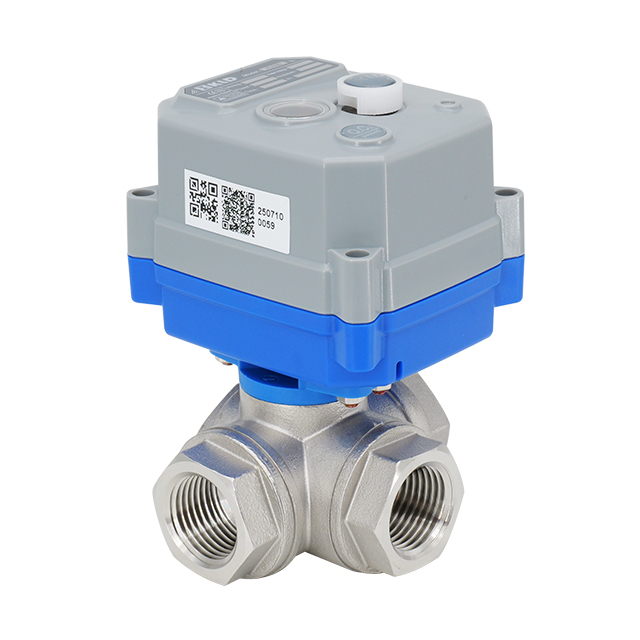
You turn the manual override. Nothing moves. Your electric ball valve feels like it’s welded shut. This happens more often than you think. Let’s figure out why. We’ll look at three mechanical failure modes. Each one needs a slightly different fix.
Grab the manual override lever. Or use a hex wrench. Apply steady force. The electric ball valve still won’t rotate. Don’t force it—you could snap the gearbox. Something physical is blocking the ball or the stem.
What kind of things cause a complete lock-up? Scale buildup inside the pipe is a common culprit. Over time, minerals deposit on the ball surface. Hardened media does the same damage. Think dried glue, sugar syrup, paint, or resin.
Never use a pipe wrench on the actuator housing. You will crack it. Never hammer the lever. You will strip the gears.
How to stop this problem before it starts:
Exercise every motorized ball valve once a month. Run it fully open, then fully closed. Two cycles minimum.
Install a strainer or filter upstream. Catch debris before it reaches the ball.
For sticky media, flush the line with a compatible solvent after each batch.
Below is a table showing common stuck causes and the best fix for each. Use it to decide your next move.
| Root Cause | Visual Clue | Best Fix | Prevention |
|---|---|---|---|
| Scale buildup | White or brown deposits on ball | Soak in descaling solution | Install water softener upstream |
| Hardened media | Sticky, gooey residue on ball | Flush with solvent; replace seats | Flush line after every use |
| Debris (sand, weld slag) | Gritty feel when turning | Remove valve; clean internally | Add a Y‑strainer before valve |
Your electric ball valve eventually opens. But it takes forever. Or it stutters—stops, starts, stops again. That jerky motion tells you something is dragging. Friction is the enemy here. Two main places cause it.
First, the stem seals. They have a packing gland you can tighten. Many technicians overtighten it. They think tighter means no leaks. Wrong. Too much compression squeezes the stem. The motor struggles to turn it. You see slow opening times. Jerky starts.
Second, the gearbox grease. It dries out after years of service. What was smooth lubricant becomes sticky paste. The motor wastes energy overcoming that goo.
Other friction points to inspect:
Actuator coupling – if set screws are loose, the coupling slips. You get jerky motion as it grabs and releases.
Bearing races inside the valve – worn bearings create uneven drag.
Bent stem – rare but possible after a pipe stress event.
What you can do right now:
Loosen the packing gland nut by a quarter turn. Test the valve. If speed improves, stop there.
Open the gearbox. Look at the grease. If it looks like wax or clay, clean it out. Apply fresh manufacturer‑specified grease. Lithium grease works for many models.
Tighten every set screw on the coupling. Use a hex key. Make sure the actuator shaft and valve stem are aligned.
You hear a grinding sound. Your electric ball valve sounds like a coffee grinder. That noise is bad news. It almost always means internal damage. Stop running the valve immediately. Every cycle makes it worse.
What makes that horrible grinding? Most often, it is worn gears inside the actuator. The teeth get rounded off. They slip instead of gripping. A broken tooth is another possibility. That loose piece bounces around the gear train. Clicking noises come from different places. It knocks against the housing each time the valve turns. Debris inside the valve cavity can also click—sand or small stones caught between ball and seat.
Listen carefully. Match the sound to the cause.
Grinding that gets louder under load = worn gear teeth.
Random clicking + erratic movement = debris inside cavity.
High‑pitched squeal + slow motion = dry bearings.
Your action plan for noisy electric ball valves:
Isolate the valve from power. Lock out the breaker.
Remove the actuator from the valve body. Keep the coupling attached.
Turn the actuator output shaft by hand. Feel for roughness.
Open the actuator housing. Inspect every gear tooth. Look for missing chunks, shiny wear patterns, or metal flakes in the grease.
Find debris? Clean the valve cavity. Flush with clean water or solvent.
If you see missing teeth, do not try to repair individual gears. Replace the whole actuator. Gear trains wear as a set. Mixing old and new gears accelerates failure.
Leaks waste product, hurt efficiency, and damage nearby equipment. Your electric ball valve might look fine on the outside while failing on the inside. We will tackle two leakage types here. Internal leakage tricks your control system. External leakage makes a mess you can see. Both need fast action.
Your display reads “closed.” Downstream pressure keeps climbing. Or you see fluid trickling past. That is internal leakage. The motorized ball valve is not sealing. Media bypasses the ball even when the actuator says fully closed.
Three things cause this. Worn PTFE seats top the list. Those soft seals get compressed over thousands of cycles. They lose their ability to hug the ball tightly. Scratches on the ball surface come next. A tiny groove lets fluid sneak through. The third culprit? The actuator not reaching true 90 degrees. A misadjusted limit switch stops rotation early. The ball sits slightly open.
How to confirm internal leakage on your electric ball valve:
Isolate the valve. Close the upstream isolation valve first. Open a downstream drain.
Pressurize the upstream side. Watch the drain. Any continuous flow means leakage.
For a more precise test, use a pressure gauge downstream. Close the valve. Monitor pressure decay over one minute.
If your motorized ball valve exceeds the limit, replace the seats. Do both seats at the same time. Inspect the ball for scratches. A polished ball costs less than a new valve. For abrasive slurries, switch to reinforced seats. PEEK handles sand and grit. Metal seats survive high temperatures.
One more tip. Sometimes internal leakage is not the valve’s fault. Foreign debris can lodge between ball and seat. Try this first: cycle the valve rapidly ten times. Open, close, open, close. The debris might flush out. No luck? Then disassemble and clean.
You see drops. Maybe a small puddle under the actuator. Or wetness around the flange bolts. External leakage is easier to find. It also causes bigger problems if ignored. Fluid can wick into the actuator. Corrosion kills the motor and control board.
Stem leakage happens at the rotating shaft. A V‑ring packing or O‑ring seals that area. They wear out from friction and temperature cycles. Tightening the gland nut often works as a temporary fix. Turn the nut a quarter rotation. Check for drips. Repeat if needed. But that is a band‑aid. The real solution is replacing the packing.
Body joint leakage occurs between the two halves of the valve body. Or where the end caps meet. Loose bolts are the first suspect. Use a torque wrench. Follow the manufacturer’s spec. Tighten in a cross pattern. Still leaking? The gasket is damaged. You must replace it.
Common external leak sources and their fixes:
O‑ring failure – Replace with new parts.
Threaded connection drip – Apply thread sealant (not tape). Re‑tighten.
Why you should never ignore external leakage:
Moisture enters the actuator housing. Circuit boards short out.
Fluid on the floor creates slip hazards. Regulatory fines may follow.
We recommend a simple monthly walk‑around. Look at every electric ball valve. Feel under the actuator stem with a tissue paper. White tissue shows even tiny drips. Check body flanges for crusty deposits—they indicate slow evaporation leaks. Catch external leakage early. It saves you from an expensive actuator replacement later.
One final note for maintenance teams. Keep a small kit nearby. Include spare stem packing, body gaskets, and a tube of silicone grease. You can fix most external leaks in under an hour. No need to remove the whole motorized ball valve from the line. Just isolate the section, relieve pressure, and get to work. Your plant stays running. Your floor stays dry.
You cycle the electric ball valve. It moves perfectly. But your SCADA shows a question mark. No confirmation signal arrives. The control system stays blind. This happens more often than you think.
Three things usually cause it. The limit switch cam slips on the shaft. That little cam rotates out of position. It no longer hits the microswitch at the right time. The microswitch itself can fail internally. You hear a click, but no electrical change happens. Broken wiring is the third culprit—vibration or rodents damage the signal wires.
Your step‑by‑step fix:
Kill power to the motorized ball valve. Lock out the breaker.
Open the limit switch box. Look inside. Find the two cams (one for open, one for closed).
Rotate the valve manually to the fully closed position using the manual override.
Adjust the closed cam so it presses the microswitch. You should hear a distinct click.
Tighten the cam screw firmly. Move the valve to fully open. Repeat for the open cam.
Test continuity with a multimeter. Touch the common and normally open terminals. Click the switch manually. The meter should beep.
Below is a quick test table for limit switch wiring. Use it to confirm your connections.
| Terminal Label | Expected Behavior When Valve Is Fully Closed | Expected Behavior When Valve Is Fully Open | Wire Color (Typical) |
|---|---|---|---|
| COM – NO | Continuity (closed circuit) | No continuity (open circuit) | Black / Brown |
| COM – NC | No continuity (open circuit) | Continuity (closed circuit) | White / Blue |
| COM – Signal | 0V (or 24V depending on wiring) | 24V (or 0V) | Yellow / Orange |
If you get no continuity even when the cam clicks, replace that microswitch. They cost very little. Keep spares in your maintenance kit.
This one is dangerous. Your motorized ball valve sits fully closed. The operator looks at the screen. It says “open.” They assume flow is running. It’s not. Production stops. Or worse, a pump runs against a closed valve.
How to fix false feedback in ten minutes:
Now check wiring. Use the table above. The COM‑NO pair should show continuity only at the closed position. Swap wires if needed.
Test by cycling the valve electrically. Watch the SCADA display. Confirm the feedback matches reality.
Never assume the factory wiring is correct. Always verify with a multimeter before trusting the display.
Modulating electric ball valves use a positioner. It converts a 4‑20 mA signal into a precise ball angle. Over time, that calibration drifts. The valve no longer closes fully at 4 mA. It may not reach 100% open at 20 mA either. Your flow control becomes inaccurate.
Why does drift happen? Vibration is a big factor. It slowly moves potentiometer wipers. Temperature cycling expands and contracts internal parts. The feedback potentiometer itself wears out after many thousands of cycles. Its resistive track develops flat spots.
Step‑by‑step recalibration:
Put the controller in manual mode. Send 4 mA to the electric ball valve.
Look at the actual ball position. Is it completely closed? Use the visual indicator on top of the actuator.
If not, adjust the zero pot on the positioner. Turn it slowly until the valve just closes.
Send 20 mA. Adjust the span pot until the valve is fully open.
Repeat the 4 mA and 20 mA checks three times. Drift often shows up on the second cycle.
Many modern positioners have an auto‑calibrate button. Press it. The valve strokes itself. It learns the endpoints. Refer to your manual for the exact sequence.
If drift comes back every few weeks, replace the feedback potentiometer. It is a wear part. Order one from your valve supplier. Installation takes twenty minutes.
Below is a drift severity table. Use it to decide between recalibration and replacement.
| Drift Behavior | Likely Cause | Action | Time Until Next Failure |
|---|---|---|---|
| Less than 2% after 6 months | Normal aging | Recalibrate annually | 6‑12 months |
| 2‑5% every 2‑3 months | Moderate potentiometer wear | Recalibrate now; plan replacement | 2‑3 months |
| More than 5% weekly | Worn or damaged pot | Replace potentiometer immediately | N/A |
| Jumps randomly at one position | Dirty resistive track | Clean with contact cleaner; test | Unknown |
Your electric ball valve runs a few times. Then it stops. The thermal overload switch cuts power. After cooling, it works again. Then it fails again. This cycle repeats. You lose production time.
Overheating has three root causes. First, duty cycle mismatch. An actuator rated S2‑15 minutes should run for 15 minutes, then rest. If you cycle it continuously, heat builds up. Second, high ambient temperature. Above 50°C (122°F), many actuators derate. They cannot shed heat fast enough. Third, mechanical binding. A stiff motorized ball valve makes the motor draw more current. More current means more heat.
How to diagnose the real cause:
Measure the temperature of the actuator housing. Use an infrared thermometer. Above 80°C (176°F) is too hot.
Check your cycle frequency. Count openings per hour. Compare to the actuator datasheet.
Disconnect the valve from the line. Turn the ball by hand. Does it move freely? No? You found the binding.
Fix each cause differently:
Duty cycle too high – Install a larger actuator with a higher S2 rating. Or add a cooling period between cycles.
High ambient temperature – Move the actuator away from steam lines or ovens. Add a sun shield for outdoor units. Install a small electric fan blowing on the housing.
Mechanical binding – Lubricate the stem packing. Clean debris from the valve cavity. Replace worn bearings.
We see many customers replace actuators unnecessarily. They assume the motor is bad. In reality, the valve was stiff. Always check manual operation first. If the electric ball valve turns easily by hand, then focus on the actuator’s electrical and thermal specs. Save your budget for real problems.
Motorized valves face several common issues: power failures, mechanical sticking, leakage, and feedback errors. You can solve most problems with basic checks. KLD offers reliable Electric Ball Valves built to withstand tough conditions. Their durable actuators and precision seals reduce downtime. KLD’s expert support helps you choose the right valve for your application, keeping your process running smoothly.
A: No power, loose wiring, or incorrect voltage often stop the valve. Check terminals with a multimeter first.
A: Replace worn PTFE seats or the ball. For abrasive media, use reinforced seats like PEEK.
A: Worn internal gears or debris in the valve cavity cause grinding. Inspect and replace the actuator if gears are damaged.
A: The limit switch cams may be swapped or miswired. Adjust cams and test continuity with a multimeter.
A: Recalibrate annually. If drift recurs every few weeks, replace the feedback potentiometer.


