

Views: 0 Author: Site Editor Publish Time: 2026-05-14 Origin: Site


Ever wondered which valve powers your HVAC system? Ball valves and globe valves serve different roles, but electric ball valves are transforming automation. In this guide, you’ll learn how they work, their pros and cons, and why KLD’s solutions stand out for efficiency and reliability.
Understanding the fundamental mechanics is key. It helps you select the right valve for your electric actuator. Every valve type brings a unique motion to the table. These movements dictate how well they pair with automated systems. Let's break down the core mechanics of these two popular valve types. We will see how they interact with electric motors and automation demands.
Ball valves operate using a simple, brilliant concept. They rely on a 90-degree rotary motion. Inside the valve, a bored sphere sits snugly within a seat. When you turn the handle or actuator, the ball rotates a quarter turn. The hollow bore then aligns perfectly with the flow path. This allows for an instantaneous open or close action.
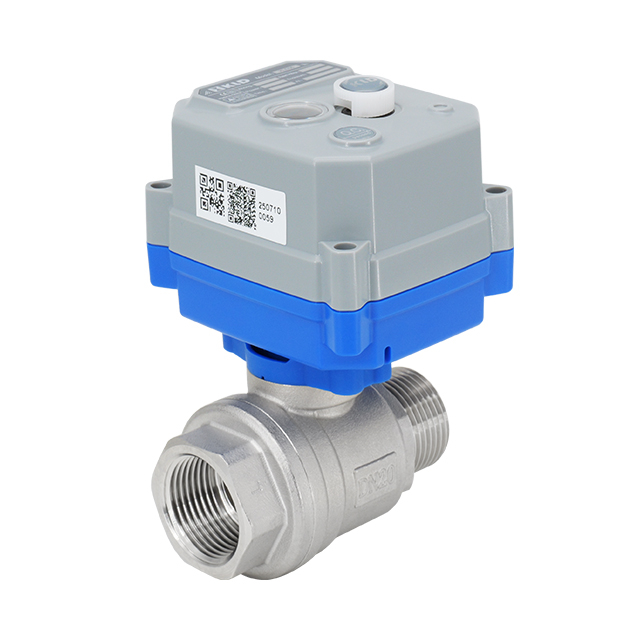
This rapid movement is highly compatible with fast-acting Electric Ball Valves. They provide rapid cycle times essential for many industrial processes. At KLD, we engineer our electric actuators to maximize this quarter-turn efficiency. Our designs ensure your system responds the exact moment you need it to. The quick, decisive motion minimizes wear on the actuator's internal gears. It also reduces the time the valve spends in a transitional state. This makes ball valves a top choice for frequent cycling applications.
Globe valves function on an entirely different mechanical principle. They utilize a multi-turn, linear motion system. A stem pushes or pulls a disc directly into the flow stream. The disc moves perpendicularly to the seat to restrict or allow flow. This gradual movement offers excellent precise control over fluid volumes.
However, this design introduces significant mechanical complexity. Automating a globe valve requires a robust electric actuator. The motor must have the power to push the disc firmly against the seat. It also needs the capacity to lift it smoothly against the fluid pressure. This multi-turn requirement means the actuator must rotate many times to achieve full travel. Consequently, the electric actuator for a globe valve must be larger and more heavy-duty. It bears a much higher mechanical load compared to a ball valve actuator.
Operational speed and torque are critical factors in valve automation. They determine the size and type of electric actuator required. Ball valves offer instantaneous operation due to their 90-degree turn. They require very low torque to shift the ball from open to closed. This allows the use of compact, energy-efficient electric actuators.
Globe valves operate much more slowly. Their multi-turn nature means the actuator must spin many revolutions. They demand high torque to overcome the friction between the disc and seat. Pushing the disc into the flowing media requires substantial force. The following table highlights these key operational differences:
| Feature | Electric Ball Valves | Electric Globe Valves |
|---|---|---|
| Operational Speed | Instantaneous (90° turn) | Gradual (Multi-turn) |
| Torque Requirement | Low | High |
| Actuator Size | Compact | Larger, Heavy-duty |
Analyzing hydraulic performance helps determine which valve truly suits your system's demands. Engineers must look past basic functionality. They need to consider how each design handles fluid dynamics. We explore critical metrics separating these two valves. Our goal provides clear insights for your next project.
Ball valves feature a straight-through flow path. The hollow bore aligns perfectly with pipes. This creates an unobstructed path for media. Consequently, electric ball valves offer minimal head loss. Their resistance coefficient (ζ) typically sits between 0.1 and 0.3. They maintain nearly 95% of the pipe's original flow capacity.
Globe valves force fluid into a "Z" pattern. Liquid changes direction multiple times. This creates significant turbulence and friction. Result? Major pressure drops. Their resistance coefficient (ζ) ranges from 4.0 to 6.0. They preserve only 60% to 70% of pipe flow capacity.
Straight-through design: Minimal obstruction, high efficiency. It saves energy in pumping systems. We see lower operational costs over time.
Z-pattern design: Multiple direction changes, high energy loss. It increases wear on pumps and pipes. Maintenance needs rise quickly.
Electric ball valves: Low ζ, high Cv, ideal for energy savings. KLD designs maximize this advantage. Our customers report significant power reductions.
| Metric | Electric Ball Valves | Globe Valves |
|---|---|---|
| Flow Pattern | Straight-through | "Z" or "S" shaped |
| Resistance Coefficient (ζ) | 0.1 – 0.3 | 4.0 – 6.0 |
| Flow Capacity (Cv) | 90% – 95% of pipe | 60% – 70% of pipe |
A valve's primary job is to stop flow completely when closed. Sealing performance varies greatly between these designs. Soft-seated electric ball valves excel in this category. They use materials like PTFE or reinforced polymers. These create a bubble-tight shut-off every time. Our KLD electric ball valves consistently achieve API 598 Class VI ratings. This standard represents zero visible leakage. It makes them perfect for gas lines or hazardous fluids.
Globe valves rely on metal-to-metal seals. The disc presses firmly into the seat ring. While effective, this method cannot match zero-leakage standards. However, metal seats handle extreme temperatures better. They resist degradation in high-heat environments. If your system exceeds 400°F, a globe valve might seem necessary. Yet, KLD offers specialized high-temperature electric ball valves. We use advanced engineering to bridge this performance gap.
Soft seats: Bubble-tight, API 598 VI, great for most fluids. They prevent costly leaks and environmental hazards. KLD ensures every valve meets strict standards.
Metal seats: Handle high temps, slight leakage acceptable. They work well in steam and thermal oil systems. Our engineers test them rigorously.
KLD innovation: High-temp electric ball valves for tough jobs. We combine metal sealing with efficient quarter-turn action. Clients trust our solutions worldwide.
System stability becomes a major concern during flow adjustments. Globe valves are notorious for causing cavitation. Rapid pressure drops create vapor bubbles. These bubbles collapse violently against valve bodies. This generates intense noise and severe pitting damage. It shortens valve lifespan dramatically. Operators often report loud banging sounds from throttling globe valves.
Electric ball valves provide superior stability in high-velocity conditions. Their streamlined flow path reduces turbulence. The quick quarter-turn action minimizes time in partial positions. This lowers cavitation risk significantly. Furthermore, our KLD electric actuators modulate ball valves smoothly. We provide precise control without damaging side effects. Your system stays quieter, safer, and more durable.
Globe valves: High cavitation risk, noisy operation. They can damage pipes and surrounding equipment. We advise caution in high-pressure drops.
Electric ball valves: Stable flow, reduced noise. They protect your infrastructure and reduce downtime. KLD actuators ensure smooth transitions.
KLD actuators: Smooth modulation prevents damage. We calibrate them for precise positioning. Your team will appreciate the quiet performance.
Matching the right valve technology to your specific industry needs is crucial. It ensures your system runs smoothly without unexpected breakdowns. Different applications demand unique valve characteristics. Let's explore where each valve type shines. We will help you make an informed decision for your next project.
Electric ball valves are the go-to choice for rapid on/off isolation. They excel in emergency shut-off scenarios. Their quick quarter-turn action stops flow instantly. This protects your equipment from potential damage. Frequent cycling is another area where they dominate. The simple mechanism experiences minimal wear over thousands of operations.
You will often find motorized ball valves in HVAC zoning systems. They efficiently control hot and cold water distribution. Water treatment plants also rely heavily on them. They handle sludge, chemicals, and clean water effectively. Compressed air systems and fire safety sprinklers benefit from their bubble-tight seal. KLD electric ball valves are specifically designed for these energy-efficient systems. They reduce pumping power requirements significantly. Our actuators provide reliable performance in these demanding environments.
Rapid Response: Instant open/close action for emergencies. It safeguards your entire pipeline network.
Energy Savings: Minimal pressure drop saves electricity. KLD valves optimize your system's hydraulic efficiency.
Versatile Media: Handles water, air, gas, and light oils. We offer various seat materials for compatibility.
Globe valves are built for precision rather than speed. They are ideal for applications requiring exact flow regulation. Their linear motion allows for fine-tuning fluid volumes. You will find them in complex chemical dosing systems. They accurately inject additives into main process streams. Boiler feed water control is another classic application. The valve handles high-pressure differentials with ease.
Turbine cooling systems also benefit from globe valves. They maintain stable temperatures under varying loads. However, automating these valves presents challenges. Their high torque requirements demand robust electric actuators. The slower multi-turn operation increases cycle times. Despite these drawbacks, they remain indispensable for throttling. No other valve matches their ability to modulate flow accurately. Engineers often specify them when precision trumps speed.
Precise Throttling: Excellent for regulating specific flow rates. It ensures your process stays within tight parameters.
High-Pressure Steam: Handles extreme pressures in power generation. The design resists wire drawing and erosion.
Chemical Dosing: Accurate injection of treatment chemicals. It maintains perfect pH balance in water treatment.
| Feature | Electric Ball Valves | Globe Valves |
|---|---|---|
| Primary Function | On/Off Isolation | Flow Throttling/Regulation |
| Best Applications | HVAC, Water Treatment, Fire Safety | Boilers, Chemical Dosing, Turbine Cooling |
| Cycling Speed | Fast (Instantaneous) | Slow (Gradual) |
Industrial environments can be incredibly harsh on valve components. Temperature extremes test the limits of materials. Standard electric ball valves operate from -196°C up to 450°C. Cryogenic applications like LNG transport use specialized low-temp ball valves. High-temperature versions handle superheated water and steam. Globe valves generally tolerate slightly higher temperatures. Some designs can withstand up to 550°C.
Corrosion resistance is equally critical for long-term reliability. Selecting the right material prevents catastrophic failures. Stainless steel (304/316) resists most chemicals and oxidation. Brass works well for potable water and low-corrosion air systems. UPVC and CPVC handle highly corrosive acids at specific temperatures. KLD provides all these material options for both valve types. We help you select the perfect combination for your environment.
Stainless Steel: Maximum corrosion resistance. Perfect for marine and chemical processing. KLD offers 316-grade for seawater applications.
Brass: Cost-effective for general purpose. Ideal for compressed air and potable water. It provides excellent machinability for complex valve bodies.
UPVC/CPVC: Ultimate chemical resistance. Handles aggressive acids and bases. Lightweight and easy to install.
The upfront cost often dictates the initial purchasing decision. For small-bore applications under 2 inches, globe valves are usually cheaper. Their simpler casting requires less precision machining. However, the cost dynamic shifts dramatically with larger sizes. When you need a 4-inch or 6-inch automated valve, electric ball valves become far more economical. The complex internal components of large globe valves drive up manufacturing costs. In contrast, KLD electric ball valves scale efficiently. Our standardized actuators fit various valve sizes seamlessly. This keeps the overall CAPEX manageable for large-scale installations. We see significant savings when specifying ball valves for major plant expansions.
Installation logistics directly impact your labor costs and timeline. Electric ball valves feature a compact, low-profile design. The automated actuator sits snugly on top of the valve body. This requires minimal horizontal and vertical clearance. You can easily install them in tight mechanical rooms. Globe valves present a different spatial challenge. Their tall, upright bonnet and actuator assembly demand significant vertical clearance. Retrofitting them into existing pipelines can be a nightmare. You might need to reroute pipes or cut into ceilings. KLD electric ball valves eliminate these spatial headaches. Our space-saving designs ensure a hassle-free installation process every time. They fit where others simply cannot go.
Long-term reliability heavily influences your total cost of ownership. Electric ball valves require infrequent maintenance. Their durable seats and stem seals last for years. You can typically run them for 50,000 cycles before needing service. When repairs are necessary, KLD designs allow for easy in-line maintenance. You simply remove the actuator and replace the seals. Globe valves demand much more attention. The constant friction between the disc and seat causes rapid wear. Typically, you must inspect and service them every 6 to 12 months. Failing to do so leads to dangerous seat leakages. Replacing a globe valve seat is a labor-intensive process. It often requires removing the entire valve from the pipeline. KLD ball valves drastically cut down your maintenance man-hours. Our reinforced PTFE seats resist abrasion. They outlast standard globe valve discs. We use high-quality stem packing to prevent external leaks. Technicians swap out internals without breaking pipe connections. It minimizes system downtime and repair bills.
Ball valves offer quick shut-off and low maintenance, while globe valves excel in precise flow control. KLD’s electric ball valves provide efficient, reliable automation for HVAC, water treatment, and industrial systems. They save energy, reduce downtime, and fit tight spaces, making them a smart long-term investment.
A: They automate on/off flow control in HVAC, water systems, and industrial processes.
A: Ball valves offer faster operation and lower maintenance than globe valves.
A: They provide reliable, energy-efficient automation with minimal downtime.
A: Large-bore electric ball valves are more economical than globe valves.
A: Yes, KLD’s models operate from -196°C to 450°C.


