Views: 0 Author: Site Editor Publish Time: 2026-05-14 Origin: Site


What happens when your control valve loses power? A boiler could explode or a reactor could overheat. ATO valves fail closed; ATC valves fail open. But what if you don't have compressed air? That's where Electric Ball Valves step in. In this guide, you'll learn the core differences between ATO and ATC, their real-world applications, and how KLD's Electric Ball Valves deliver the same fail-safe protection without an air supply.
An ATO valve stays closed when no air pressure is present – the internal spring holds it shut. To get flow going, you apply instrument air to push against that spring, forcing the valve open. More air pressure means a wider opening. If the air supply fails, the spring instantly drives the valve back to closed. That’s why we call it fail-closed.
Key traits of ATO valves:
Default state (zero air) is closed. The spring alone keeps the valve shut without any external signal.
Air pressure’s job is to overcome the spring and open the valve gradually as pressure rises.
Fail-safe outcome on air loss is closed – a critical safety feature for many processes.
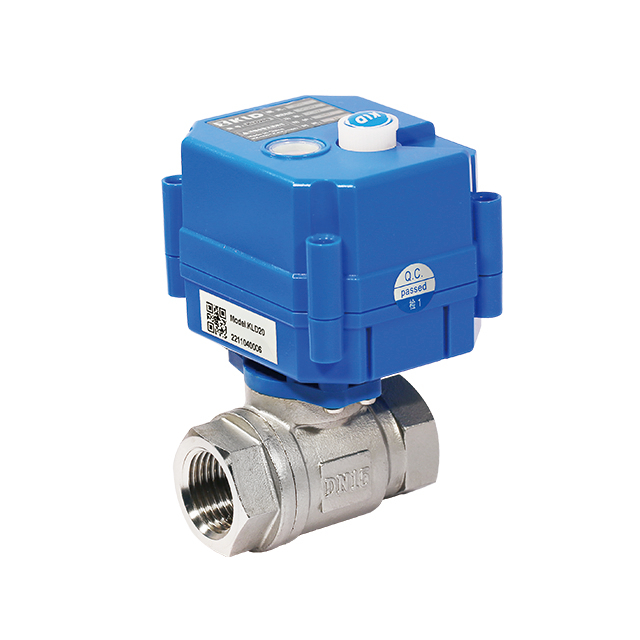
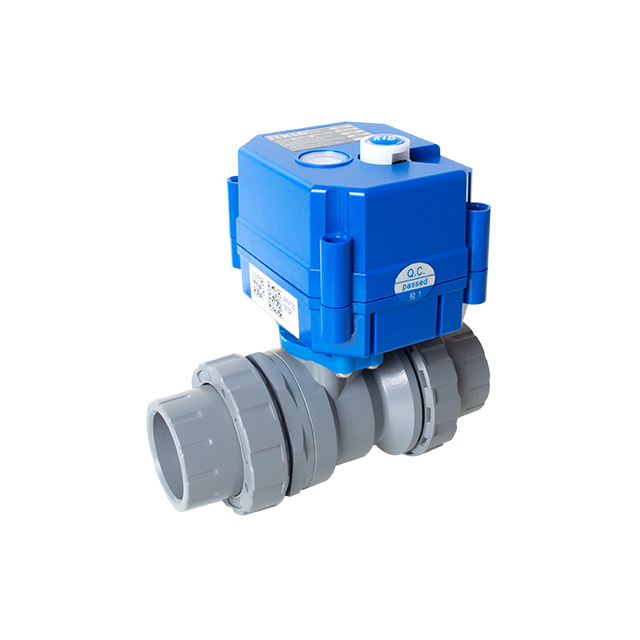
You’ll find ATO valves in boiler fuel lines, steam turbine inlets, and chemical injection systems. Why? Because losing air must stop fuel, steam, or chemicals to prevent disasters. Now here’s where Electric Ball Valves come in: they don’t use air, but a normally closed (NC) spring-return electric ball valve works exactly the same way. Apply power to open; cut power to close. That’s ATO behavior without any compressed air infrastructure.
Flip the logic – an ATC valve sits open when no air is applied. The spring holds it fully open, letting fluid pass freely. To stop the flow, you apply air pressure to push the spring and close the valve. If air fails, the spring shoves the valve back open. That’s fail-open operation.
Here’s what defines an ATC valve:
Default state (zero air) is open. The spring keeps the valve wide open by design.
Air pressure’s role is to close the valve, fighting against the spring’s natural position.
Fail-safe outcome on air loss is open – essential for processes that must keep flowing during emergencies.
Typical ATC applications include boiler feedwater lines, steam generator cooling, and air compressor unloaders. For example, a boiler feedwater valve must fail open to prevent dry-firing and explosion. Electric Ball Valves can mimic this too – just choose a normally open (NO) spring-return model. Power the valve to close it; remove power and it springs open. No air supply needed, just a simple electric connection.
| Feature | ATO (Pneumatic) | ATC (Pneumatic) | NC Electric Ball Valve | NO Electric Ball Valve |
|---|---|---|---|---|
| Default state (no power/air) | Closed | Open | Closed | Open |
| Requires external energy to… | Open the valve | Close the valve | Open the valve | Close the valve |
| Fail-safe position | Closed (fail-closed) | Open (fail-open) | Closed (fail-closed) | Open (fail-open) |
You might be wondering: if ATO and ATC are purely pneumatic terms, why bring up Electric Ball Valves? Good question. They don’t breathe air, they run on electricity. But the core idea – what happens when the driving force disappears – translates directly. For pneumatic valves, losing air triggers a fail-safe position. For Electric Ball Valves, losing power does the same trick.
So here’s the deal:
ATO/ATC describe how a pneumatic actuator responds to air pressure and what it does when air fails.
Electric Ball Valves have no air port, no diaphragm, no spring chamber – just a motor and (optionally) a return spring or capacitor.
Yet we can mimic ATO and ATC behaviors by picking the right fail-safe configuration: normally closed (NC) or normally open (NO).
Think of it this way – the language differs, but the safety logic stays identical. “Fail-closed” in pneumatics equals “normally closed with spring return” in electric. “Fail-open” equals “normally open with spring return.” Some Electric Ball Valves even offer a capacitor-return option: the capacitor stores enough charge to move the valve once after power drops. Pretty clever, right?
| Electric Ball Valve Type | Fail-Safe Behavior | Equivalent Pneumatic Valve |
|---|---|---|
| NC with spring-return | Power loss → closed | ATO (Air-to-Open) |
| NO with spring-return | Power loss → open | ATC (Air-to-Close) |
| NC/NO without spring | Power loss → stays put | No direct pneumatic equivalent |
Let’s draw a clear map. It’s not complicated once you see the pattern. An NC (normally closed) Electric Ball Valve sits shut when idle. Apply power, and the motor opens it. Lose power, and the spring (or capacitor) drives it back to closed. That’s exactly what an ATO pneumatic valve does – just swap air for electricity.
Now flip it. An NO (normally open) Electric Ball Valve stays open by default. Power it up, and the motor closes it. Power failure? The spring yanks it open again. Sound familiar? That’s an ATC valve in electric clothing.
But here’s where Electric Ball Valves go one step further. Some models offer a fail-in-place (also called fail-last) option. No spring at all. When power dies, the valve simply freezes wherever it was – partially open, fully closed, somewhere in between. Pneumatic ATO and ATC can’t do that without adding locking devices or auxiliary air tanks. They always snap to one extreme. So if your process can’t handle a sudden full closure or full opening, a fail-in-place Electric Ball Valve might be your only safe answer.
Key mapping points to remember:
NC + spring return = ATO (fail-closed)
NO + spring return = ATC (fail-open)
NC or NO without spring = fail-in-place (unique to electric)
Let’s be practical. Pneumatic valves are great, but they’re not always the right tool. You should seriously consider Electric Ball Valves in these scenarios:
No instrument air on site – Compressed air systems are expensive. You need a compressor, dryer, filters, piping, and regular maintenance. Remote skids, small water treatment plants, and rooftop HVAC units rarely have that luxury. An Electric Ball Valve just needs a power cord.
You need precise modulating control – Pneumatic positioners can be finicky. Dead band, hysteresis, air leaks – they all hurt accuracy. Electric actuators with servo drives offer constant torque and precise positioning down to ±1%. They hold position without drifting.
Fail-in-place is a must – Imagine a chemical reactor where suddenly closing or opening a valve would cause pressure spikes or unsafe mixing. You need the valve to stay put on power loss. Only Electric Ball Valves with springless designs give you that.
Lower long-term maintenance – No air filters to change. No dryer desiccant to replace. No leaking fittings or clogged orifices. Just an occasional visual check and maybe a gear grease every few years.
Common examples we see:
Solar-powered irrigation systems (can’t run an air compressor)
Cleanroom HVAC (no oil mist from air exhaust)
Corrosive fume hoods (plastic Electric Ball Valves resist acids better than metal pneumatics)
We’re not saying Electric Ball Valves win every time. They have real drawbacks. Know them before you specify.
Hazardous areas are tricky – Pneumatic ATO/ATC valves are intrinsically safe. No sparks, no arcing, no heat. You can put them directly in a Class I, Div 1 gas group. For an Electric Ball Valve, you need an explosion-proof enclosure. Those are heavy, expensive, and still not allowed in some zones.
Cycling life varies widely – Cheap electric actuators overheat under continuous duty. They might die after 10,000 cycles. High-quality units can hit 500,000 or more, but they cost more. Pneumatic actuators routinely run millions of cycles without breaking a sweat.
Response time can be slower – Need the valve to snap shut in under a second? Pneumatic with a quick-exhaust valve can do that. Electric motors take time to spin. Even fast electric actuators run around 2-5 seconds for a 90° turn.
Power dependency – Loss of electricity kills an Electric Ball Valve unless you add a battery backup or capacitor. Pneumatic ATO/ATC only need air pressure; a small receiver tank can keep them working through short outages.
Let’s put it side by side:
| Consideration | Electric Ball Valves | Pneumatic ATO/ATC |
|---|---|---|
| Hazardous area suitability | Requires expensive enclosure | Intrinsically safe (no sparks) |
| Typical cycle life | 50k – 500k+ (depends on quality) | 500k – 2M+ |
| Response time (90°) | 2 – 10 seconds | 0.5 – 3 seconds |
| Fail-in-place possible? | Yes (no spring) | No (spring forces one extreme) |
| Utility needed | Electricity | Clean, dry instrument air |
So which one wins? It depends on your plant, your safety needs, and your budget. We use Electric Ball Valves where air is scarce or fail-in-place matters. We stick with ATO/ATC pneumatics in explosive zones or high-cycle applications. The good news? Both can get the job done – you just have to match the technology to the task.
These valves save lives and equipment by shutting flow off when air disappears. Let’s look at where you’ll find them.
Boiler fuel shut-off valves – Imagine a fired boiler losing air pressure. You don’t want fuel still spraying in while the burner runs wild. An ATO valve slams closed instantly, starving the fire and preventing an explosion. That’s non-negotiable safety.
Steam turbine inlet valves – Overspeed destroys turbines in seconds. An ATO valve on the steam supply cuts flow the moment air fails. The turbine coasts down safely instead of tearing itself apart.
Chemical injection systems – Over-dosing chemicals can ruin entire batches or create toxic reactions. ATO valves stop the injection dead when air drops, keeping your process within safe limits.
Medical gas systems – Hospitals rely on oxygen and nitrous oxide lines. An uncontrolled release could harm patients or create fire hazards. ATO valves fail closed, so no gas escapes unexpectedly.
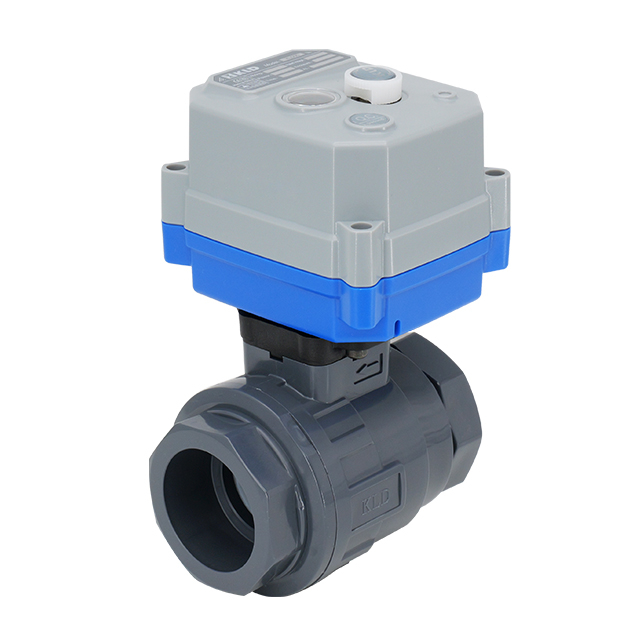
Notice the pattern? Every application demands fail-closed behavior. If you can’t supply air, an Electric Ball Valve configured as normally closed (NC) with spring return gives you the same protection. No compressed air needed – just a reliable power source and a battery backup for true fail-safe.
Now let’s flip the script. These valves must stay open when air fails – closing would cause disaster.
Boiler feedwater control – A dry boiler explodes. It’s that simple. If air pressure fails, the feedwater valve must crack open to keep water flowing into the drum. ATC valves do exactly that. They fail open, preventing catastrophic overheating.
Steam generator quench systems – Overheated generator tubes need immediate cooling. An ATC valve opens on air loss, flooding the quench line and protecting expensive equipment from thermal shock.
Air compressor unloader valves – Trapped pressure after a compressor trip can damage valves or seals. ATC valves vent that pressure by failing open, allowing the system to safely unload.
Cooling water bypass lines – Process heat exchangers rely on constant cooling. If air fails, a closed bypass would stop flow entirely. ATC keeps the bypass open, preventing temperature runaway.
So when do you use Electric Ball Valves here? Choose a normally open (NO) spring-return model. Apply power to close it; remove power and it springs open. Perfect for remote cooling stations or small boiler skids without instrument air.
| Application Type | Pneumatic Solution | Electric Ball Valve Equivalent |
|---|---|---|
| Boiler fuel shut-off | ATO (fail-closed) | NC with spring return |
| Boiler feedwater | ATC (fail-open) | NO with spring return |
| Chemical injection stop | ATO (fail-closed) | NC with spring return |
| Cooling water bypass | ATC (fail-open) | NO with spring return |
We’ve seen many plants switch to Electric Ball Valves because pneumatics just don’t make sense there. Here are the top situations.
Remote pipeline stations – No instrument air lines run for miles. Installing a compressor just for one valve? Too expensive. An Electric Ball Valve runs off solar-charged batteries. Simple, reliable, and cheap.
Water and wastewater treatment plants – These facilities already have power everywhere. Adding air piping would mean digging trenches and buying dryers. Electric Ball Valves drop right into existing control panels. They work quietly, don’t leak air, and pair easily with battery backups for fail-safe operation.
HVAC systems and cleanrooms – Pneumatic valves exhaust air into the room. That’s a problem for cleanrooms (particles) and quiet office spaces (noise). Electric Ball Valves produce no exhaust, no hissing, and no contamination. They just sit there until told to move.
Corrosive or high-purity environments – Think acid dosing lines or ultrapure water systems. Air lines can introduce moisture, oil, or dirt. Electric Ball Valves with PVC, CPVC, or PTFE bodies avoid that risk entirely. Their actuators are sealed, so corrosive fumes won’t eat them alive.
We also like Electric Ball Valves when we need fail-in-place – something pneumatics can’t do. Imagine a blending process where sudden valve closure would spike pressure. With a springless Electric Ball Valve, it just freezes where it is. No drama.
Let’s walk through a real case from competitor content: hot well level control in a power plant. They use two different valves with opposite fail-safe actions.
Recirculation valve = ATO (fail-closed). When hot well level drops too low, this valve opens to circulate water back. If air fails, it closes – no unnecessary recirculation.
Main feedwater control valve = ATC (fail-open). When level rises too high, this valve opens to drain excess water. Air failure forces it open, preventing overflow and maintaining safe level.
So could an Electric Ball Valve replace either one? Yes, but carefully.
Replace the ATO recirculation valve with an NC Electric Ball Valve (spring return). Power opens it; power loss closes it. Works perfectly if you have reliable electricity.
Replace the ATC feedwater valve with an NO Electric Ball Valve (spring return). Power closes it; power loss opens it. However, many power plants keep pneumatics here because they already have large air receivers that ride through short outages. An Electric Ball Valve would need a hefty battery bank to match that runtime.
We’ve seen hybrid solutions too: keep the critical ATC valve pneumatic, but switch smaller ATO valves to electric where air piping is hard to run. The key is matching fail-safe direction first, then worrying about the power source.
Before you even look at cost or availability, ask one brutal question: what must happen when control power or air disappears? The answer drives everything. If your process demands flow to stop, you need fail-closed behavior. That means an ATO pneumatic valve or a normally closed (NC) Electric Ball Valve with a spring return. If flow must continue, go fail-open – an ATC pneumatic valve or a normally open (NO) Electric Ball Valve. But what if sudden movement either way causes problems? You need fail-in-place, which only Electric Ball Valves can deliver using a mechanical holding brake or capacitor hold. Pneumatic ATO and ATC always snap to one extreme because their springs don’t offer a middle ground.
Let’s break down the safety logic into a quick reference:
Must stop flow on failure → Choose ATO (pneumatic) or NC Electric Ball Valve. Both close automatically when their energy source dies.
Must keep flowing on failure → Choose ATC (pneumatic) or NO Electric Ball Valve. Both spring open to protect your equipment.
Must freeze in last position → Only Electric Ball Valves with springless designs or brake systems work here. No pneumatic equivalent exists without complex add-ons.
Let’s be honest: not every site has clean, dry instrument air just waiting to be tapped. Pneumatic ATO and ATC valves need a whole support system – a compressor, air dryer, filters, pressure regulators, and a network of pipes. If that infrastructure doesn’t already exist, you’re looking at a massive upfront investment. We’re talking tens of thousands of dollars just to feed one valve.
Electric Ball Valves take a much simpler path. They only need a power supply – 24V DC, 110V AC, 220V AC, whatever your control panel provides. Want fail-safe operation? Add a small battery backup or a capacitor-return actuator. No dryer, no filters, no leaky fittings. Just wires and a power source.
So here’s how we decide:
Existing air system with capacity → Pneumatic ATO/ATC make sense. You’ve already paid for the compressor. Use it.
No air system on site → Electric Ball Valves win every time. Installing a compressor for a handful of valves is economic madness.
Remote or solar-powered location → No contest. Electric Ball Valves with low-power draw and battery backup work beautifully. Pneumatic would need a dedicated air compressor running off the same solar array – inefficient and unreliable.
We’ve worked on water treatment plants where instrument air was nowhere to be found. Swapping to Electric Ball Valves cut installation costs by 70% and eliminated yearly dryer maintenance. The valves just sit there, doing their job, asking for nothing but a little electricity.
This factor often catches people off guard. Pneumatic ATO and ATC valves are naturally safe for explosive atmospheres. Why? No electrical components inside the actuator body. No sparks, no arcing, no heat sources. You can drop them directly into Class I, Div 1 gas groups without a second thought. That’s why oil refineries, chemical plants, and fuel depots still love pneumatics.
Electric Ball Valves face a tougher road here. Their motors and circuit boards can create sparks. To use one in a hazardous area, you need an explosion-proof enclosure. Those are heavy, expensive, and require special certifications. Even then, some zones forbid them entirely.
But don’t write off Electric Ball Valves completely. They shine in other environments:
Non-hazardous areas – Water treatment, HVAC, food processing, cleanrooms. No explosive gases mean no enclosure headaches.
High humidity or washdown zones – Sealed Electric Ball Valves handle moisture better than pneumatic positioners with tiny bleed ports.
Corrosive atmospheres – Pneumatic actuators often have aluminum housings that corrode. Electric Ball Valves with stainless steel or plastic bodies last much longer.
Let’s talk money and hassle. Many people assume pneumatic valves are cheaper because the valve itself costs less. But that’s only half the story. Pneumatic ATO and ATC valves demand regular attention. You need to check air quality, change filter elements, dry out the air dryer, replace leaking fittings, and calibrate positioners. Compressed air is also incredibly inefficient – it takes about 8 horsepower of electricity to make 1 horsepower of pneumatic power. That energy cost adds up over time.
Electric Ball Valves flip the script. Their annual maintenance is almost nothing. No filters, no dryers, no air leaks. Just an occasional visual inspection and maybe a gear grease every few years. They’re also more accurate for modulating duty. Servo-controlled electric actuators hold position with ±1% precision, no drift, no hysteresis. Pneumatic positioners can wander due to dirt in the air supply or diaphragm fatigue.
Break it down by category:
Initial purchase price – Pneumatic wins here. A basic ATO or ATC valve with positioner costs less than an equivalent Electric Ball Valve with servo drive.
Installation cost – Electric wins if you don’t have existing air piping. Running wires is cheaper than running air lines plus a compressor setup.
Energy cost – Electric wins by a landslide. A small Electric Ball Valve uses pennies worth of power per cycle. A pneumatic valve wastes most of its compressed air through positioner bleed.
Maintenance cost – Electric wins. No consumables, no air leaks, no dryer maintenance.
Control accuracy – Electric wins for modulating service. Pneumatic is fine for on/off but struggles with precise positioning.
So which one has lower total life cycle cost? It depends on how many valves you have and whether you already own an air compressor. For a single valve in a remote spot, Electric Ball Valves crush pneumatics. For a whole plant with an existing air system, pneumatics might still make sense. We recommend running a 5-year cost analysis before deciding.
ATO valves fail closed; ATC valves fail open. Both rely on air pressure. Electric Ball Valves from KLD offer the same fail-safe choices without compressed air. Choose NC for fail-closed or NO for fail-open. KLD delivers reliable, low-maintenance electric actuation for water treatment, HVAC, and remote sites. Their spring-return designs keep your process safe when power drops.
A: ATO means air-to-open (fails closed), and ATC means air-to-close (fails open). They describe how a pneumatic valve reacts when air pressure is lost.
A: Yes. Use a normally closed Electric Ball Valve to copy an ATO valve, or a normally open one to copy an ATC valve. KLD makes both types.
A: Choose fail-open ( NO Electric Ball Valve). This keeps water flowing during an air or power failure, preventing the boiler from running dry.
A: KLD explosion-proof electric valves feature reliable safety performance, perfectly suited for flammable and explosive working conditions.
A: Look at your utilities. If you have instrument air, ATO is fine. If not, a KLD Electric Ball Valve with spring return gives you the same fail-closed action without the compressor.