

Views: 0 Author: Site Editor Publish Time: 2026-04-21 Origin: Site


Ever wondered how fluid flow stops instantly in a system? A small device often makes that happen. A 2 way valve plays a key role in many industries.In this article, you will learn how a 2 way valve controls flow. We will explain its working principle, key components, and real applications. This will help you understand how it supports modern automation systems.
A 2-way valve is a basic on-off flow control device with two bidirectional ports for pipeline connection,one inlet and one outlet. The valve allows fluid to pass through or blocks it completely. This simple structure makes it one of the most widely used components in fluid systems. The design focuses on direct control rather than complex routing.
A 2 way valve operates in two clear states, which define its working behavior:
Open position
Fluid moves freely through the internal passage. The flow path aligns with the pipeline. This state supports normal operation in most systems.
Closed position
Internal sealing components block the passage completely. Flow stops instantly. This ensures isolation and safety when required.
Unlike multi-port valves, a 2 way valve does not redirect flow. The purpose remains simple: control whether fluid moves or stops. This simplicity reduces internal wear and improves long-term stability. KLD motorized ball valves apply this principle while adding compact structure and reliable actuation for automated systems.
| Valve Type | Ports | Core Function | Typical Application |
|---|---|---|---|
| 2 way valve | 2 | On/off flow control | Shut-off, isolation |
| 3 way valve | 3 | Flow switching/mixing | Direction control systems |
| Multi-port valve | 4+ | Complex flow routing | Advanced process systems |
A 2 way valve is used across many industries because the function remains simple and dependable. Systems that require only start or stop control benefit the most from this design. Complex routing is not necessary in many real-world applications.
Typical usage scenarios include:
Water treatment systems
Water supply lines rely on stable shut-off control. Maintenance becomes easier when sections can be isolated quickly. System downtime is reduced significantly.
HVAC systems
Heating and cooling loops depend on controlled fluid flow. Temperature regulation improves when valves respond quickly. Motorized options allow integration into automated building systems.
Oil and gas pipelines
Fluid transport requires safe isolation points. High-pressure environments demand durable valve materials. Stainless steel options perform well in these conditions.
Chemical processing lines
Corrosive media require proper material selection. PVC and stainless steel valves help maintain system integrity. Leakage prevention is critical in these applications.
Industrial automation systems
Automated pipelines depend on precise control signals. Electric actuators simplify operation. KLD motorized valves support remote control and consistent performance.
The main reason for widespread use is clear. Most systems only need reliable open and close control, not flow direction changes. A 2 way valve handles this requirement efficiently without adding unnecessary complexity.
A 2 way valve is often selected because it balances performance and simplicity. Engineers focus on long-term reliability and ease of operation. In many systems, fewer components mean fewer problems.
Key advantages include:
Simple internal design
Fewer moving parts reduce mechanical stress. Maintenance becomes easier over time. System reliability improves under continuous operation.
Stable and consistent performance
Open and close actions remain predictable. Tight sealing prevents leakage. This is important in safety-critical environments.
Lower overall cost
Purchase cost remains affordable. Installation requires less effort. Long-term maintenance expenses stay minimal.
Effective shut-off capability
Flow stops completely when closed. Isolation becomes reliable. This supports safe system operation.
Strong compatibility with automation
Electric actuators integrate easily. Remote control functions improve efficiency. KLD designs include features such as fail-safe options and signal feedback.
| Selection Factor | 2 Way Valve Benefit | Best Use Scenario |
|---|---|---|
| Flow control type | Simple on/off control | Isolation systems |
| System complexity | Low | Basic pipeline setups |
| Cost efficiency | Economical | Budget-sensitive projects |
| Maintenance | Minimal upkeep required | Long-term industrial use |
| Automation support | Easy actuator integration | Smart control environments |
KLD enhances these advantages by combining compact valve design, long service life, and flexible automation features. This approach ensures that a 2 way valve performs reliably in both small systems and demanding industrial environments.
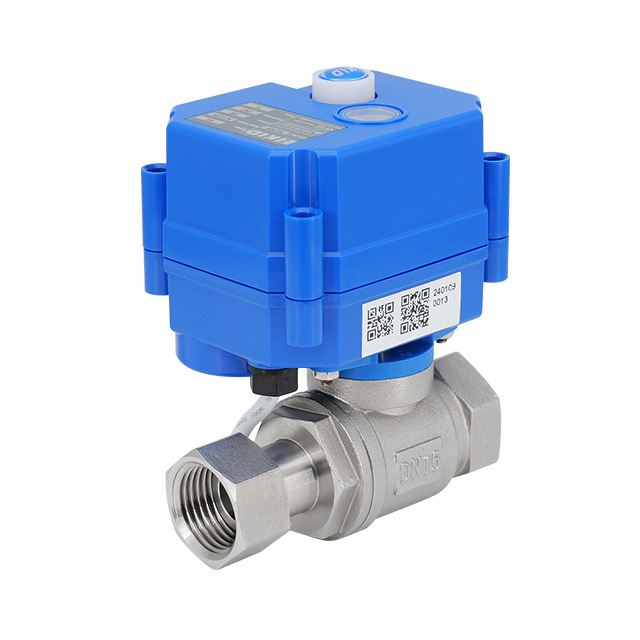
A 2 way valve controls flow by switching between two clear states: open and closed. The valve connects an inlet and an outlet, allowing fluid to pass through or stopping it completely. This direct mechanism makes the valve highly efficient in systems where simple flow control is required.
The flow behavior can be understood through its two operating states:
Open state
The internal passage aligns with the pipeline. Fluid moves smoothly from inlet to outlet. Pressure loss remains low when the design uses a full port structure.
Closed state
Internal components block the flow path. Fluid movement stops immediately. This ensures effective isolation for maintenance or safety purposes.
Flow path structure
The inlet and outlet form a straight or slightly curved passage. No redirection occurs inside the valve. This minimizes turbulence and improves efficiency.
Internal sealing role
Sealing elements create tight contact surfaces. Leakage is prevented during closure. Long-term sealing performance depends on material quality and design precision.
In KLD motorized ball valves, this control process is enhanced by stable actuator movement and reliable sealing design. The result is consistent open/close performance even under continuous operation.
A 2 way ball valve operates using a spherical ball with a hole (bore) through its center. This structure determines whether fluid can pass through the valve or not. The movement of the ball directly controls the flow path.
The working process can be broken down into key actions:
Ball structure
A hollow sphere sits inside the valve body. The bore inside the ball acts as the flow channel. This design allows smooth flow when aligned correctly.
Open position
The bore aligns with the pipeline direction. Fluid passes through the valve without obstruction. Flow efficiency remains high due to minimal resistance.
Closed position
The ball rotates 90 degrees. The non-bore sealing surface of the ball fully blocks the flow passage. Fluid flow stops completely at this point.
Quarter-turn operation
Only a 90-degree rotation is required. This allows fast switching between open and closed states. It also reduces operation time in automated systems.
Inside a 2 way valve, several components work together to control fluid movement. The internal process involves mechanical motion, fluid dynamics, and sealing interaction. Each step plays a role in ensuring stable performance.
Key internal processes include:
Component movement
The actuator or handle drives the stem. The stem rotates the ball or closure element. Movement must remain smooth to avoid wear.
Flow behavior when open
Fluid passes through the bore with minimal restriction. Pressure drop depends on valve size and port design. Full port valves allow higher flow rates.
Sealing during closure
Seats press against the ball surface. Tight contact prevents leakage. Material selection affects sealing durability over time.
Transition phase
During opening or closing, partial flow may occur briefly. Proper design reduces turbulence. This helps protect internal components.
KLD improves this internal process by using advanced sealing structures and durable materials. The design ensures reliable opening even after long periods of inactivity, while maintaining consistent sealing performance in demanding environments.
The valve body forms the external structure of a 2 way valve. It holds all internal components in place and connects directly to the pipeline. A strong body ensures durability under pressure and temperature changes. Material choice affects corrosion resistance and long-term stability in different environments.
Different connection types allow the valve to fit various systems. Selection depends on installation conditions and maintenance needs:
Threaded connection
Installation becomes quick and simple. Small systems benefit the most from this type. Maintenance also remains convenient when space is limited.
Flanged connection
Larger pipelines often require this option. It provides stronger sealing under high pressure. Industrial systems rely on this structure for stability.
Tri-Clamp connection
Hygienic applications use this design frequently. Food, beverage, and pharmaceutical systems benefit from easy cleaning. Quick disassembly improves efficiency during maintenance.
Union connection
Easy removal and replacement becomes possible. It reduces downtime during servicing. Compact systems often use this type.
Proper installation plays a critical role in valve performance. Misalignment can lead to leakage or reduced sealing efficiency. KLD designs focus on compact structure and precise machining, which helps ensure stable installation across different application environments.
| Connection Type | Installation Style | Typical Use Case | Key Advantage |
|---|---|---|---|
| Threaded | Screw-in | Small pipelines | Easy installation |
| Flanged | Bolted connection | Industrial systems | High strength sealing |
| Tri-Clamp | Clamp-based | Sanitary applications | Quick cleaning |
| Union | Detachable joint | Compact systems | Easy maintenance |
The internal control of a 2 way valve depends on three main elements: the ball, the stem, and the actuation system. Each part works together to control fluid movement accurately.
Ball as the control core
The ball contains a bore through its center. Flow occurs only when the bore aligns with the pipeline. A smooth surface reduces resistance and improves efficiency.
Stem for motion transfer
The stem connects the actuator or handle to the ball. Rotational movement transfers directly to the ball. Stable stem design prevents vibration and wear.
Actuation mechanism
Operation can be manual or motorized. Manual valves use handles for direct control. Motorized valves use electric actuators for automated systems.
Motorized systems bring additional advantages:
Faster and more consistent operation
Remote control capability in automation systems
Reduced manual labor in industrial environments
KLD integrates compact motors and efficient transmission systems into its motorized ball valves. This approach improves positioning accuracy and extends service life in continuous operation scenarios.
Seals and seats determine how effectively a 2 way valve prevents leakage. These components create tight contact surfaces between the ball and the valve body. Proper sealing ensures reliable shut-off under different pressure conditions.
Seats function
Seats hold the ball in position. They provide a soft or hard sealing surface. Contact pressure ensures tight closure during operation.
Sealing materials
Common materials include PTFE and reinforced polymers. Material choice depends on temperature and chemical exposure. Proper selection improves durability.
Leakage prevention
Precision machining reduces gaps between components. Tight sealing surfaces block fluid escape. This is essential for safety-critical systems.
Long-term performance
Wear resistance affects lifespan. High-quality seals maintain performance over repeated cycles. KLD uses advanced sealing structures to support reliable operation even after long inactivity periods.
In real systems, sealing performance directly impacts efficiency and safety. A well-designed sealing system ensures stable operation, especially in demanding environments such as chemical processing or industrial automation.
KLD applies the 2 way valve working principle through a combination of compact engineering and durable internal design. The goal remains simple: reliable open and close control. The execution, however, focuses on performance, space efficiency, and long-term stability.
Key design features include:
Compact and miniature structure
Space-saving design fits tight installations. Integration becomes easier in equipment and control systems. This matters in HVAC units and automation panels.
Extended service life
Up to 500,000 operation cycles are supported. Internal components reduce wear during repeated switching. This improves reliability in continuous-use environments.
Advanced motor technology
DC and brushless motors provide stable torque output. Energy efficiency improves during operation. Reduced noise and smoother motion benefit system performance.
Optimized sealing structure
Reliable sealing ensures consistent shut-off. Even after long idle periods, opening remains stable. This supports systems that do not operate continuously.
KLD focuses on combining mechanical simplicity with engineered durability. This allows the basic 2 way valve principle to perform effectively in demanding conditions.
A modern 2 way valve often requires integration into automated systems. KLD enhances the traditional valve structure by adding intelligent control features. These features improve operational efficiency and system responsiveness.
Core automation capabilities include:
Electric actuator integration
Precise control replaces manual operation. Actuators convert electrical signals into mechanical motion. This enables remote operation across large systems.
Fail-safe configurations
Normally open (NO) and normally closed (NC) options are available. System safety improves during power loss situations. This is critical in fluid control systems.
Signal feedback and monitoring
Alarm output signals provide system status. Operators can monitor valve position in real time. This reduces uncertainty during operation.
LED status indication
Visual indicators show valve status clearly. Maintenance becomes easier when quick checks are needed. This improves usability in field conditions.
Remote and automated control
Integration into control systems becomes seamless. Centralized control reduces manual workload. Industrial automation benefits from consistent valve response.
These capabilities transform a simple 2 way valve into a key component of smart control systems. KLD designs ensure that control precision matches mechanical reliability.
| Control Feature | Function Description | System Benefit |
|---|---|---|
| Electric actuator | Converts signals into motion | Automated operation |
| Fail-safe design | NO/NC configurations | Safety during power loss |
| Alarm output | Sends status signals | Real-time monitoring |
| LED indication | Visual status display | Easy maintenance |
| Remote control | Central system integration | Improved efficiency |
Material selection plays a critical role in the performance of a 2 way valve. KLD offers multiple material options to match different fluid types and operating environments. Each material supports specific performance requirements.
Common material choices include:
Stainless steel (SS304 / SS316)
Suitable for corrosive and high-temperature environments. Chemical processing systems often require this option. Durability remains high under harsh conditions.
Brass
Commonly used in general-purpose systems. Good balance between cost and performance. Suitable for water and air applications.
PVC / UPVC
Resistant to weak corrosive media; suitable for water treatment and mild chemical environments.Easy installation benefits many systems.
Media compatibility remains broad:
Water systems benefit from corrosion resistance
Oil systems require stable sealing performance
Gas systems need reliable shut-off capability
Air systems depend on low resistance flow
KLD ensures compatibility across these media types by combining material quality with precision manufacturing. This allows the 2 way valve to maintain stable operation across diverse applications.
KLD applies the 2 way valve working principle across multiple industries. Each application benefits from reliable on/off control and efficient automation support. System requirements vary, but the core valve function remains consistent.
Typical application areas include:
HVAC systems
Flow control supports heating and cooling loops. Temperature regulation improves through precise operation. Compact valves fit easily into system layouts.
Water treatment systems
Isolation and flow control improve system maintenance. Corrosion-resistant materials extend service life. Reliable shut-off ensures system safety.
Industrial automation
Automated pipelines require consistent valve response. Electric actuators simplify integration. Production efficiency improves through stable operation.
Chemical processing systems
Handling of aggressive media requires durable materials. Sealing performance prevents leakage. System safety remains a priority.
Medical and equipment systems
Precision control supports sensitive operations. Compact valve design fits limited spaces. Reliable performance ensures operational stability.
A 2 way valve controls flow through simple open and close action. Its ball structure ensures fast shut-off and stable sealing. KLD enhances this principle using compact design, long service life, and motorized control. These valves improve efficiency, reliability, and automation performance in modern systems.
A: A 2 way valve controls on/off flow in water, gas, or oil systems.
A: A 2 way valve opens or closes flow using a ball or sealing element.
A: A 2 way valve offers simple design, low cost, and reliable shut-off.
A: A 2 way valve controls flow, while a 3 way valve redirects flow paths.
A: A 2 way valve can use electric actuators for remote and automatic control.


