Views: 0 Author: Site Editor Publish Time: 2026-04-21 Origin: Site


Why do so many systems rely on a 2 way ball valve? Simple design, yet strong control. Many engineers choose it for quick shut-off and stable performance.A 2 way ball valve manages flow in a straight path. It opens or closes fluid movement without complex routing. This makes it useful in water, gas, and industrial systems.
In this article, you will learn how a 2 way ball valve works. We will explore its types, applications, and key features. You will also understand how to choose the right valve for your system.
A 2 way ball valve is a flow control device designed with two ports, one for inlet and one for outlet. Fluid enters through one side and exits through the other, creating a single straight flow path. This structure makes the valve highly efficient for systems that only require start or stop control rather than flow direction changes.
In practical use, a 2 way ball valve is widely selected because of its simplicity and reliability. Installation remains straightforward, and operation requires minimal effort. Many industrial and commercial systems rely on this valve type to ensure stable shut-off performance and consistent flow control.
Key Characteristics of a 2 Way Ball Valve:
Simple Flow Path:
A single inlet and outlet reduce system complexity. Engineers can design pipelines more easily without considering multiple flow routes.
Fast Operation:
A quick quarter-turn movement allows rapid opening and closing. This helps improve system response time during operation.
Wide Application Range:
Suitable for water, gas, oil, and air systems. Various industries adopt this valve due to its adaptability.
The internal design of a 2 way ball valve combines simplicity with precision. Each component plays a role in ensuring smooth operation and reliable sealing under different working conditions.
Main Components and Their Roles:
Ball Core:
A drilled spherical component that controls flow. Rotation aligns or blocks the passage inside the valve.
Stem Connection:
The stem connects the ball to the handle or actuator. Rotation force is transferred through this part.
Valve Seat:
Seats press tightly against the ball surface. This prevents leakage and ensures long-term sealing performance.
Valve Body:
The outer shell houses all internal parts. It connects directly to the pipeline system and supports structural stability.
Another important design factor involves the port type. Full port valves allow unrestricted flow, while reduced port valves provide a more compact structure with slightly lower flow capacity.
Advanced designs often include improved sealing materials and compact configurations. These enhancements help maintain performance even after long idle periods.
The operation of a 2 way ball valve is based on a 90-degree rotation mechanism. This simple movement determines whether fluid can pass through or not.
During operation, the internal ball rotates inside the valve body:
When the hole in the ball aligns with the pipeline, fluid flows freely
When the ball rotates perpendicular to the flow path, the passage closes completely
Transition between states occurs quickly with minimal resistance
Key Operational Features:
Quarter-Turn Control:
A 90-degree rotation completes the full open or close action. This allows fast switching without complex mechanisms.
Low Flow Resistance:
Full port designs reduce pressure loss. Fluid moves smoothly through the valve when fully open.
Reliable Shut-Off:
Tight sealing ensures minimal leakage. This is critical in systems requiring precise control.
Such a working principle makes the 2 way ball valve highly efficient in both manual and automated systems.
Choosing between manual and motorized versions depends on system requirements. Each type offers different advantages depending on the level of control needed.
Manual 2 Way Ball Valve:
Operation Method:
Controlled using a lever or handle. Direct human operation provides immediate response.
Application Scope:
Suitable for simple systems where automation is not required. Common in basic installations.
Cost Advantage:
Lower initial cost and simpler maintenance make it a practical choice for smaller setups.
Motorized 2 Way Ball Valve:
Automated Control:
Equipped with an electric actuator. Enables remote operation and integration with control systems.
System Efficiency:
Reduces manual intervention. Improves consistency in automated environments such as HVAC or water treatment.
Advanced Features:
Supports functions such as fail-safe positioning, signal feedback, and programmable control.
Motorized solutions are increasingly preferred in modern systems. Compact actuator design, extended service life, and stable performance support continuous operation in demanding conditions.
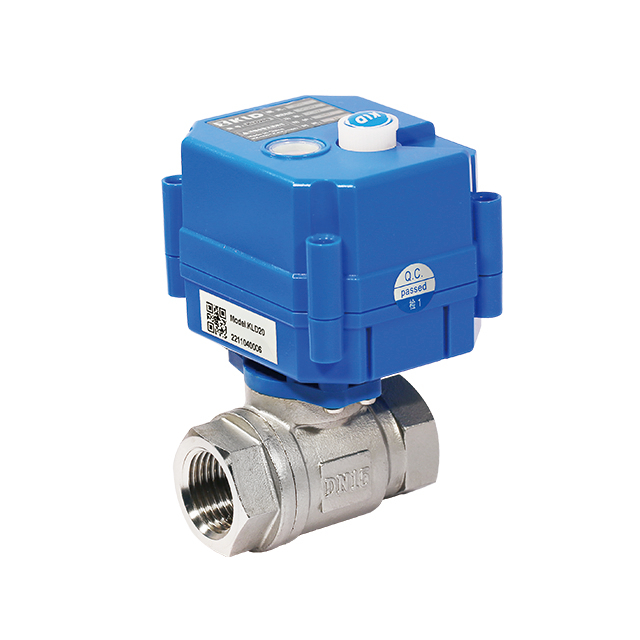
Material selection directly affects durability, corrosion resistance, and application suitability. Different industries require different materials depending on the fluid, pressure, and environment.
Common Material Options:
Stainless Steel (304/316L):
Stainless steel valves provide excellent corrosion resistance and strength. 304 works well for general environments, while 316L performs better in chemical or marine conditions. Many sanitary and industrial systems prefer this material due to its clean surface and durability.
Brass Valves:
Brass offers a balance between cost and performance. It works well in water systems and general-purpose applications. Mechanical strength remains sufficient for medium-pressure environments, making brass a widely used option.
PVC / UPVC Valves:
Plastic valves are lightweight and resistant to many chemicals. PVC and UPVC are suitable for water treatment, irrigation, and corrosive media handling. Lower weight also simplifies installation in compact systems.
| Material | Key Advantages | Typical Applications |
|---|---|---|
| Stainless Steel | Corrosion resistance, high durability | Chemical, food, industrial systems |
| Brass | Cost-effective, good strength | Water supply, general use |
| PVC/UPVC | Lightweight, chemical resistance | Water treatment, irrigation |
Structure determines how the valve performs in terms of maintenance, flow capacity, and installation flexibility. Different designs meet different system requirements.
Main Structural Variations:
One-Piece Design:
A compact and simple structure with fewer connection points. Maintenance options are limited, but the design reduces leakage risks and works well in small systems.
Two-Piece and Three-Piece Design:
These designs allow easier maintenance and part replacement. A three-piece valve is especially useful in industrial setups where cleaning or repair is required without removing the entire valve.
Full Port vs Standard Port:
Full port valves allow maximum flow with minimal restriction. Standard port valves reduce flow slightly but offer a more compact and economical design.
Compact and Mini Ball Valves:
Compact valves are designed for tight installation spaces. Mini motorized ball valves are often used in automation systems where space and weight are critical factors.
Connection type affects how easily the valve integrates into a system. Selecting the right connection ensures secure installation and long-term reliability.
Common Connection Methods:
Threaded Connections (NPT/BSP):
Threaded valves are easy to install and remove. They are widely used in small to medium-sized pipelines and do not require welding.
Flanged Connections:
Flanged valves are suitable for larger pipelines and higher-pressure systems. They provide strong and stable connections, especially in industrial environments.
Tri-Clamp Sanitary Connections:
Tri-clamp connections are commonly used in hygienic systems. Food, beverage, and pharmaceutical industries prefer this type due to easy cleaning and quick assembly.
Proper connection selection helps reduce installation time and prevents leakage issues. System compatibility should always be checked before installation.
Actuation determines how the valve operates and how it integrates into control systems. Different actuation methods suit different levels of automation.
Types of Actuation:
Manual Lever Operation:
A handle controls the valve directly. This method is simple, reliable, and cost-effective for systems that do not require automation.
Electric Motorized Ball Valves:
An electric actuator controls valve movement. This allows remote operation and integration with automated systems such as HVAC, water treatment, and industrial control systems. Compact motorized designs also support long service life and stable performance.
Pneumatic Ball Valves:
Compressed air drives the valve operation. Pneumatic systems are suitable for environments requiring fast response and frequent operation, especially in industrial automation.
Each actuation type offers different benefits. Manual valves provide simplicity, while motorized and pneumatic valves improve efficiency and enable system automation.
A 2 way ball valve plays a key role in industrial systems where flow control must stay simple and reliable. Many manufacturing lines depend on quick shut-off functions to maintain process stability. In automated environments, consistency matters more than complexity, so this valve type becomes a practical choice.
Typical Use Cases in Industrial Systems:
Manufacturing Equipment Control:
Production lines often require precise start and stop of fluid supply. A 2 way ball valve ensures repeatable control without complex routing. Stable performance supports continuous operation cycles.
Industrial Fluid Management:
Systems handling water, oil, or compressed air rely on reliable shut-off points. The valve reduces risk of leakage and helps isolate sections during maintenance.
Integration in Automated Systems:
Electric motorized versions connect easily to control units. Automation platforms use signals to open or close valves, reducing manual work. Compact actuator design fits into space-limited installations.
Modern compact motorized valves also support long service life and stable switching. This makes them suitable for high-frequency industrial use.
Heating, cooling, and water systems require efficient flow control across different environments. A 2 way ball valve provides a simple solution for managing fluid movement without adding complexity to the system.
Common HVAC and Water Applications:
Heating and Cooling Systems:
Flow control in HVAC systems ensures proper temperature regulation. A valve opens or closes to control water circulation through pipes and equipment.
Water Treatment and Distribution:
Treatment plants rely on valves to isolate sections and manage flow. Clean water distribution systems benefit from durable materials and consistent sealing.
Water-Saving Control Systems:
Automated shut-off reduces unnecessary water usage. Integration with control systems improves efficiency and supports sustainable operation.
| Application Area | Function of 2 Way Ball Valve | Key Benefit |
|---|---|---|
| HVAC Systems | Control water flow in heating/cooling | Energy efficiency |
| Water Treatment | Isolate and regulate pipeline sections | Reliable operation |
| Distribution Systems | Manage flow across pipelines | Reduced water loss |
In these systems, compact valve design helps save installation space. Motorized options further enhance automation and control accuracy.
Sanitary systems require strict control over cleanliness and material safety. A 2 way ball valve used in these environments must meet hygiene standards while maintaining reliable flow control.
Key Requirements in Sanitary Applications:
Hygienic Pipeline Systems:
Smooth internal surfaces prevent contamination. Stainless steel materials help maintain cleanliness during operation.
Material Compatibility:
Stainless steel 304 and 316L are commonly used. These materials resist corrosion and support food-grade requirements.
Clean-in-Place (CIP) Compatibility:
Systems often require frequent cleaning. Valve designs must allow easy flushing without disassembly.
Tri-clamp connection types are often selected in these environments. Quick installation and removal simplify maintenance procedures. Reliable sealing ensures no leakage during processing.
Handling aggressive media requires strong materials and reliable sealing. A 2 way ball valve provides dependable shut-off control in systems dealing with oil, gas, and chemicals.
Critical Considerations in These Industries:
Media Handling Capability:
Valves must handle oil, gas, and chemical fluids without degradation. Material selection becomes a key factor.
Pressure and Corrosion Resistance:
High-pressure environments require durable valve bodies. Stainless steel or specialized materials help resist corrosion and extend service life.
Safety and Reliability:
Leak prevention is essential in hazardous systems. A secure sealing mechanism reduces risk and improves operational safety.
Application Characteristics Overview:
Oil Systems:
Require stable shut-off under varying pressure conditions. Flow control must remain consistent over time.
Gas Pipelines:
Demand tight sealing to prevent leakage. Quick operation improves safety during emergency shut-down.
Chemical Processing:
Exposure to corrosive media requires resistant materials. Valve performance must remain stable under harsh conditions.
In these industries, actuator-driven valves often improve safety. Remote control allows quick response without direct human intervention.
Selecting the right 2 way ball valve depends on several technical factors. Each system has different requirements, so careful evaluation helps avoid performance issues later. A correct choice improves efficiency, safety, and long-term reliability.
Core Factors to Evaluate:
Pressure and Temperature Requirements:
Operating pressure and temperature directly affect valve performance. High-pressure systems need stronger valve bodies and sealing materials. Temperature limits also matter, especially in heating or chemical environments. Always match valve specifications to real working conditions.
Flow Rate and Valve Size (DN/Diameter):
Flow capacity determines how efficiently fluid moves through the system. Larger diameters allow higher flow rates, while smaller valves suit compact systems. Incorrect sizing may cause pressure drop or reduced efficiency.
Media Compatibility:
Fluid type plays a critical role in material selection. Water, oil, gas, or chemicals require different resistance levels. Choosing the wrong material may lead to corrosion or sealing failure.
The choice between manual and motorized operation depends on how the system is controlled. Different environments require different levels of automation and responsiveness.
Manual Valve Selection:
Simple Operation Needs:
Manual valves work well in systems where frequent adjustment is not required. A handle provides direct control without additional components.
Cost and Maintenance Considerations:
Lower upfront cost makes manual valves suitable for small installations. Maintenance remains simple because fewer components are involved.
Limited Control Requirements:
Local operation is sufficient in systems without automation. No need for electrical integration or control signals.
Motorized Valve Selection:
Automation Requirements:
Motorized valves allow remote control through electric actuators. Integration with control systems improves operational efficiency.
Consistency and Precision:
Automated operation ensures consistent valve movement. This reduces human error and improves system stability.
Fail-Safe and Remote Control Features:
Advanced designs include fail-safe positioning during power loss. Remote monitoring and signal feedback improve safety in complex systems.
In many modern applications, motorized valves are preferred. Compact actuator design and long service life support continuous operation in automated environments.
Beyond basic selection factors, additional features influence long-term performance. These details often determine how well the valve performs under real conditions.
Critical Features to Evaluate:
Service Life and Durability:
High cycle life ensures reliable operation over time. Systems with frequent switching require valves designed for extended use.
Sealing Performance and Leakage Prevention:
A strong sealing mechanism prevents fluid loss and maintains system pressure. High-quality seat materials improve sealing reliability.
Protection Rating (e.g., IP67):
Environmental protection is important in outdoor or harsh conditions. Higher IP ratings protect internal components from dust and water.
A 2 way ball valve offers simple and reliable flow control in many systems. Its straight-through design allows quick open and close operation, making it ideal for water, gas, and industrial applications. Understanding its structure, working principle, and types helps improve system performance and efficiency.Choosing the right valve depends on pressure, media, and control needs.KLD provides compact motorized ball valves with long service life, stable sealing, and flexible configurations, helping users achieve efficient and dependable flow control across various applications.
A: A 2 way ball valve controls on/off flow in water, gas, or oil systems.
A: A 2 way ball valve uses a rotating ball to open or block flow.
A: Motorized 2 way ball valve allows remote control and automation.
A: Common materials include stainless steel, brass, and PVC for different uses.
A: Choose based on pressure, media type, and automation needs.