Views: 0 Author: Site Editor Publish Time: 2026-04-21 Origin: Site


Why do so many 3-way valve systems fail even when properly installed? Many users experience leakage, unstable flow, or actuator issues that reduce efficiency and increase maintenance costs. This article explores the most common problems with a 3-way valve, explains their root causes, and provides practical insights to help you improve performance, extend service life, and choose a more reliable valve solution.
Leakage is one of the most common and costly problems in a 3-way valve system. It often starts small, then gradually affects system pressure, flow accuracy, and overall reliability. In many cases, leakage is not caused by a single factor. Instead, it results from a combination of wear, contamination, and installation conditions. Understanding where leakage comes from helps reduce downtime and maintenance frequency.
Internal leakage occurs when the valve fails to completely block flow between ports. This usually means the sealing surfaces are no longer working as intended. Over time, friction, pressure changes, and media conditions all affect sealing performance.
Worn valve seats or damaged ball surface
The seat and ball form the primary sealing pair. Once they wear out, even slightly, small gaps appear. These gaps allow fluid to pass through, even when the valve is fully closed. Continuous operation accelerates this process.
Debris trapped between sealing surfaces
Solid particles, rust, or scale can enter the valve during operation. These materials often settle between the ball and seat. As a result, the valve cannot close tightly, leading to constant internal leakage.
Long-term wear from high-frequency operation
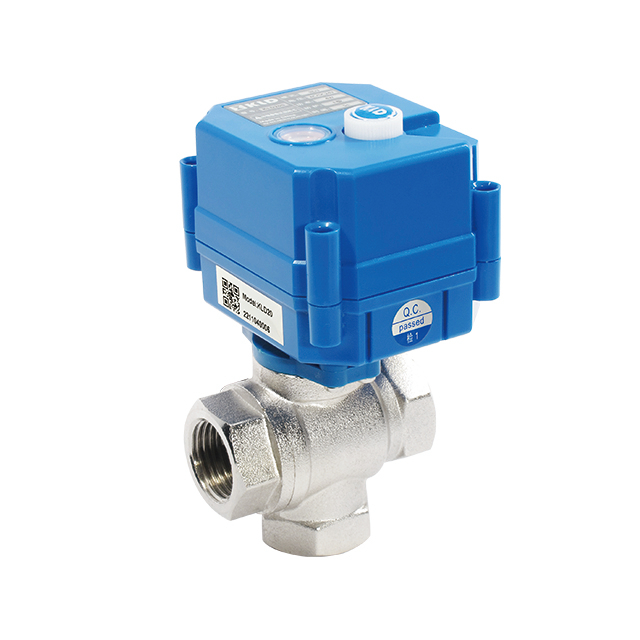
Frequent switching increases friction between moving parts. Over time, sealing edges lose precision. Compact motorized designs, such as those used in KLD valves, help reduce wear through optimized sealing structures, but high-cycle applications still require regular inspection.
External leakage is usually visible and easier to detect. However, it often indicates mechanical stress or improper installation. Even a small leak can lead to safety risks or system inefficiency if not addressed early.
Stem packing degradation
The stem moves during valve operation, which creates constant friction. Packing materials gradually lose elasticity and sealing ability. This allows fluid to escape around the stem area.
Loose flange or threaded connections
Vibration, pressure fluctuation, or improper tightening can loosen connections over time. Once gaps form, leakage begins at joints or connection points.
Improper installation or sealing materials
Using unsuitable sealing tape or gaskets reduces sealing reliability. Misalignment during installation can also increase stress on joints, making leakage more likely.
Diagnosing leakage in a 3-way valve requires both observation and simple checks. Many problems can be identified without removing the valve from the system. A systematic approach helps locate the issue quickly and accurately.
Pressure drop observation
If pressure drops after the valve is closed, it often indicates internal leakage. A properly functioning valve should maintain stable pressure.
Visual inspection points (stem, joints, ports)
Look for moisture, residue, or stains around connection points. These signs usually indicate external leakage and should not be ignored.
Flow inconsistency during shut-off
If flow continues or mixes incorrectly, the valve may not be sealing properly. This often relates to worn components or incorrect positioning.
| Symptom | Likely Cause | Recommended Check |
|---|---|---|
| Flow continues when closed | Seat wear or debris | Inspect ball and seat surfaces |
| Pressure cannot hold steady | Internal leakage | Perform pressure stability test |
| Moisture around stem | Packing degradation | Check and replace packing if needed |
| Leakage at joints | Loose or damaged connections | Retighten or replace sealing parts |
| Unstable shut-off behavior | Misalignment or wear | Verify valve position and alignment |
A consistent inspection routine makes a big difference. Checking sealing surfaces, connection points, and actuator response helps identify issues early. Over time, this approach reduces unexpected failures and extends the service life of the 3-way valve.
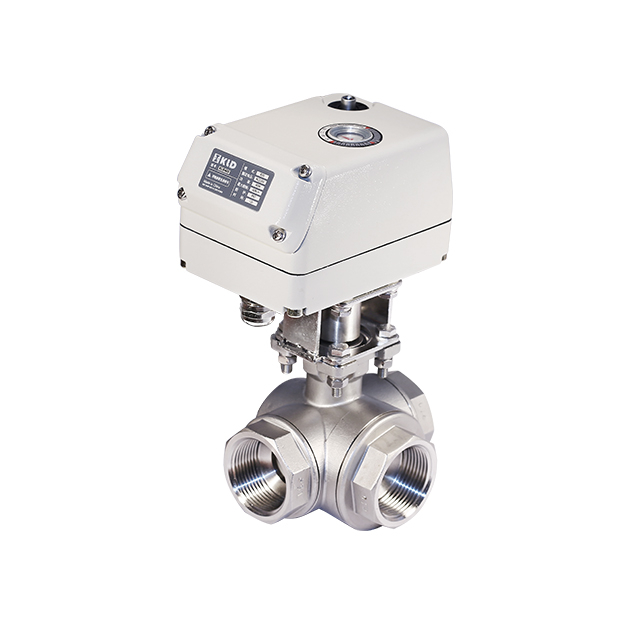
Smooth operation is critical for any 3-way valve. When switching becomes slow, inconsistent, or stuck, system performance drops quickly. These issues often develop gradually. Early signs include increased torque, delayed response, or irregular actuator movement. In automated setups, both mechanical and electrical factors must be checked together.
A 3-way valve may feel stiff or resist movement when internal friction increases. This usually points to surface condition, lubrication, or component alignment problems.
Corrosion or rust buildup
Moisture, oxygen, or aggressive media can attack internal metal parts. Rust forms on the ball or stem, increasing friction. Over time, it makes rotation uneven and may cause sticking during switching.
Lack of lubrication
Moving parts rely on proper lubrication to reduce wear. When lubrication dries out or is missing, friction rises sharply. This leads to higher torque demand and faster wear of sealing components.
Mechanical deformation of internal components
High pressure, temperature cycles, or improper installation can deform the ball, stem, or seat. Even slight deformation changes contact geometry. That change increases resistance and reduces smooth operation.
Motorized 3-way valves add convenience, but they also introduce electrical and control-related risks. When the actuator fails, the valve may stop responding or move incorrectly.
Power supply instability
Fluctuating voltage or incorrect power input can affect motor performance. The actuator may stall, overheat, or fail to reach the correct position.
Signal wiring or control issues
Incorrect wiring or unstable control signals can confuse the actuator. The valve may move to the wrong position or fail to follow commands. Stable signal input is essential for precise control.
Limit switch misalignment
Limit switches define the open and closed positions. If they are not calibrated correctly, the actuator may stop too early or overshoot. This affects sealing performance and switching accuracy.
Manual override is a useful feature, especially in power failure situations. However, improper use can create additional problems or even damage the valve.
Incorrect use of manual override
Forcing the valve without understanding its position can damage internal parts. It is important to follow the correct switching direction and procedure.
Mechanical resistance during manual switching
If resistance is high, it often indicates internal wear or blockage. Continuing to force movement may worsen the condition or break components.
Safety risks during forced operation
Sudden release of pressure or unexpected movement can create safety hazards. Proper shutdown and pressure release should always be completed before manual operation.
A consistent inspection routine helps prevent most operation issues. Checking lubrication, actuator response, and internal condition keeps the 3-way valve working smoothly and reliably.
Flow control is the core function of a 3-way valve. When performance issues appear, the system may still run, but accuracy drops and efficiency declines. These problems are often linked to incorrect configuration, improper sizing, or unstable operating conditions. In many cases, users assume the valve is faulty, while the real issue comes from selection or system design.
A 3-way valve works differently depending on its internal structure. If the flow path is misunderstood, the system cannot perform as expected. This is one of the most overlooked causes of failure.
Mixing vs diverting confusion
Mixing valves combine two flows into one outlet. Diverting valves split one inlet into two outlets. If these functions are confused, the system delivers the wrong flow direction. It may lead to process imbalance or even equipment malfunction.
L-port vs T-port selection errors
L-port valves allow flow between two ports at a time. T-port valves can connect multiple ports simultaneously. Choosing the wrong type changes how flow moves through the system. This directly affects switching logic and output consistency.
Installation orientation mistakes
Incorrect installation direction can block flow paths or create unwanted mixing. Many valves have flow direction markings. Ignoring them often leads to performance issues that look like valve failure.
| Configuration Type | Function Behavior | Common Mistake | Resulting Problem |
|---|---|---|---|
| Mixing valve | Combines two inputs | Used as diverting valve | Incorrect output flow |
| Diverting valve | Splits one input | Used as mixing valve | Flow misdirection |
| L-port valve | Connects two ports at a time | Wrong port alignment | Partial or blocked flow |
| T-port valve | Connects multiple ports | Incorrect application choice | Unstable flow distribution |
Unstable flow is often linked to sizing and system design. Even a high-quality 3-way valve cannot perform well if it is not matched to the application.
Incorrect valve sizing (Cv mismatch)
When the valve is too small, flow is restricted. When it is too large, control becomes unstable. Proper Cv selection ensures balanced flow and accurate control.
Excessive pressure differential
High pressure differences across the valve increase flow velocity. This can create turbulence, reduce control accuracy, and accelerate wear inside the valve.
Poor system design integration
The valve must match the pipeline layout and process requirements. Poor integration leads to uneven flow distribution and unstable switching behavior.
In practical systems, these issues often appear together. For example, an oversized valve combined with high pressure can cause rapid fluctuations. Compact motorized designs, such as those used in KLD 3-way valves, help improve control stability. They provide precise switching and consistent positioning, which reduces flow variation in automated systems.
Cavitation is a hidden but serious problem in liquid systems. It happens when pressure drops below the liquid’s vapor pressure, creating vapor bubbles. These bubbles collapse suddenly, causing damage inside the valve.
High velocity liquid flow
When flow speed increases, pressure drops quickly inside the valve. This creates conditions where cavitation can occur, especially in partially open positions.
Pressure drop below vapor pressure
Once pressure falls below the vapor level, bubbles form. When they collapse, they generate shock waves. These shocks damage internal surfaces over time.
Long-term internal damage risks
Cavitation leads to pitting, noise, and vibration. It also shortens valve life and reduces sealing performance. If ignored, it can cause complete valve failure.
Common Symptoms of Cavitation in a 3-Way Valve
Loud noise similar to cracking or rattling
Noticeable vibration in the pipeline
Gradual loss of sealing performance
Visible damage on internal components after inspection
Understanding these performance issues helps identify whether the problem comes from configuration, sizing, or operating conditions. A properly selected 3-way valve, combined with correct installation and stable control, significantly reduces these risks.
Material choice and maintenance routines strongly affect how a 3-way valve performs over time. Many failures do not come from design limits. They come from mismatch between material and media, or from skipped maintenance. When we align materials, conditions, and service intervals, the valve runs longer and more predictably.
Choosing the right material is not optional. It determines corrosion resistance, sealing life, and safe operating range. Different media attack materials in different ways, so we must match them carefully.
Corrosion resistance (stainless steel vs plastic vs brass)
Stainless steel handles moisture and many chemicals well. Brass works for general water systems and moderate conditions. Plastics like PVC and UPVC offer good resistance to weak acids and general low-corrosion media. If the wrong material is used, corrosion starts early and spreads quickly. Over time, it weakens sealing areas and reduces structural strength.
Compatibility with chemical or abrasive media
Chemical media can swell seals or degrade polymers. Abrasive particles scratch the ball and seat. These effects reduce sealing precision and increase leakage risk. Selecting compatible materials keeps surfaces stable and reduces wear rates.
Temperature and pressure limitations
Every material has a safe range. High temperature can soften plastics or reduce seal elasticity. High pressure can deform seats or stress the body. Matching these limits to real conditions avoids early failure and keeps control stable.
| Material Type | Strengths | Limitations | Typical Use Cases |
|---|---|---|---|
| Stainless Steel | High corrosion resistance, durable | Higher cost | Industrial fluids, harsh media |
| Brass | Good machinability, stable sealing | Limited corrosion resistance | Water systems, general service |
| PVC / UPVC | Chemical resistance, lightweight | Lower temperature and pressure limits | Water treatment, light chemicals |
Wear develops gradually. It starts from friction, pressure cycles, and media interaction. If left unchecked, small defects grow into major failures. Most wear appears on moving or sealing components.
Seat erosion and sealing degradation
Continuous flow and pressure changes erode the seat surface. Once the surface loses smoothness, sealing becomes less effective. This leads to internal leakage and unstable shut-off.
Ball surface scratches or deformation
The ball rotates during every operation. Abrasive particles or poor lubrication scratch its surface. Even small scratches break the sealing line, allowing fluid to pass through.
Stem wear and packing failure
The stem transfers motion from the actuator to the ball. Repeated movement causes wear. Packing materials around the stem lose elasticity over time, which leads to external leakage.
Typical Wear Indicators in a 3-Way Valve
Increased torque during operation
Gradual loss of sealing performance
Visible scratches or uneven surfaces
Minor leakage that grows over time
In compact motorized valves, design improvements can reduce wear. For example, optimized sealing structures and brushless motor control help reduce friction and extend service life. These features are often used in modern KLD 3-way valve designs to improve durability in repeated operations.
Maintenance is the most effective way to prevent unexpected failure. It does not require complex tools. It requires consistency and attention to key components. Regular checks help identify early signs of wear before they become critical.
Regular inspection and cleaning
Inspect the valve body, stem area, and connections. Remove dirt and residue from external surfaces. Check for early leakage signs or unusual noise.
Lubrication and seal replacement schedule
Lubrication reduces friction and protects moving parts. Over time, seals lose flexibility and must be replaced. A planned schedule keeps performance stable and avoids sudden failure.
Importance of upstream filtration
Installing a filter before the valve reduces particle entry. Clean media protects the ball and seat from scratches. This simple step significantly extends valve life.
Maintenance Checklist for a 3-Way Valve
| Maintenance Task | Frequency | Key Purpose |
|---|---|---|
| Visual inspection | Monthly | Detect leakage and surface issues |
| Cleaning | As needed | Remove debris and buildup |
| Lubrication | Periodic | Reduce friction and wear |
| Seal replacement | Scheduled cycle | Maintain sealing performance |
| Filter inspection | Regular | Ensure clean media flow |
A structured maintenance routine improves reliability and reduces downtime. When material selection and maintenance work together, the 3-way valve delivers stable performance under demanding conditions.
Common problems in a 3-way valve usually come from leakage, wear, or poor setup.Proper material selection and regular maintenance can reduce these risks and improve stability. KLD provides compact and reliable motorized 3-way valve solutions. Their designs support long service life, stable control, and flexible configuration. These features help users achieve better performance and lower maintenance costs in real applications.
A: A 3-way valve may leak due to worn seals, debris, or improper installation.
A: A 3-way valve becomes hard to operate due to rust, insufficient lubrication, or internal component wear.
A: Choose a 3-way valve based on mixing or diverting needs and correct port design.
A: Yes, incorrect sizing affects flow control and causes unstable performance in a 3-way valve.
A: Clean, lubricate, and inspect the 3-way valve regularly to prevent wear and leakage.