

Views: 0 Author: Site Editor Publish Time: 2026-04-21 Origin: Site


Ever struggled to control flow in a complex system? Many setups fail because a 3-way valve is used incorrectly. Small mistakes can lead to poor performance or unstable operation.
In this article, you will learn how to use a 3-way valve in real systems. We will cover configurations, installation methods, and common mistakes to help improve efficiency and reliability.
A 3-way valve is a flow control device designed to manage fluid movement between three ports. Unlike a standard 2-way valve, it adds flexibility by allowing multiple flow paths within a single compact component. This makes it especially useful in systems where space is limited but functionality cannot be compromised. In many automation setups, we rely on it to reduce the need for multiple valves, simplifying both installation and maintenance.
When we look at why it has three ports instead of two, the answer becomes practical. A 2-way valve only opens or closes a single path. A 3-way valve, however, allows us to redirect or switch flow without adding extra piping or components. It supports more complex operations, especially in systems like HVAC or water treatment, where fluid direction changes frequently.
The working principle of a 3-way valve is based on how fluid flows through its internal structure. Inside the valve, there is typically a ball with specially designed flow paths. These paths determine how the three ports connect at any given position. When the valve rotates, the internal channels align differently, allowing or blocking specific flow routes.
We can think of it as a controlled intersection. The valve does not just open or close. It decides which direction the fluid should take. This is why understanding the internal mechanism is critical before using it.
In automated systems, the rotation is usually controlled by a motorized actuator. KLD, for example, integrates brushless motor technology and precise control systems, allowing the valve to operate reliably over hundreds of thousands of cycles. This means the valve does not just move fluid—it becomes part of a smart control system.
Another important detail is how rotation affects flow direction. Even a small angle change can completely alter which ports are connected. Because of this, correct configuration is essential before operation. If the internal design does not match the application, the system may behave unexpectedly.
Using a 3-way valve for flow diversion means directing one inlet toward two different outlets depending on system demand. This setup is widely used in applications where fluid needs to be routed between separate pipelines without stopping operation. A properly configured 3-way valve reduces system complexity and improves control efficiency.
In a typical setup, one port acts as the inlet while the other two serve as outlets. Rotation of the internal ball changes the connection path, allowing fluid to move toward the selected outlet. This configuration is commonly used in water systems, HVAC circulation, and cooling loops, where flow must alternate between two destinations.
Typical flow diversion setup:
One inlet connected to a pump or main supply line
Two outlets connected to different circuits or zones
Valve position determines which outlet receives flow
Rotation angle directly impacts flow direction and system response
Flow switching involves selecting between two input lines and directing flow to a single output. This configuration is useful when a system needs to alternate between different sources, such as backup supply lines or dual-process inputs. A 3-way valve simplifies this process by combining switching logic into one device.
In this setup, two ports are connected to different input sources, while the third port serves as the output. Rotation of the valve determines which input is connected to the output at any moment. This approach is widely used in automated systems, where continuous operation is required.
A bypass system allows fluid to avoid certain components when necessary. A 3-way valve plays a key role by redirecting flow either through the main process line or through a bypass route. This is especially important during maintenance, pressure control, or system protection.
In this configuration, one port connects to the main inlet, one connects to the primary system, and the third connects to the bypass line. Valve position determines whether fluid flows through the main equipment or bypasses it entirely.
Why bypass control is needed:
Protect sensitive equipment from overload
Maintain flow during maintenance or shutdown
Control pressure and temperature in the system
Improve system flexibility without adding extra valves
How positioning affects flow:
Position A → Flow enters main system
Position B → Flow diverted to bypass line
Intermediate positions may partially distribute flow depending on design
Mixing or distribution applications require careful consideration when using a 3-way valve. Some configurations allow fluid from different sources to combine or distribute across multiple paths. However, not all 3-way valves are designed for precise mixing, especially standard ball valve types.
Mixing is typically achieved when two inlet streams are allowed to converge into one outlet. Distribution works in reverse, where one inlet splits into multiple outputs. Both functions depend heavily on valve design and internal flow path configuration.
When mixing is required:
Temperature control systems (hot and cold water blending)
Chemical dosing processes
Industrial fluid balancing systems
Limitations of mixing with ball valves:
Limited precision compared to control valves
Flow ratio may not be finely adjustable
Internal design may cause uneven distribution
Key considerations before use:
Confirm whether the valve supports mixing or only switching
Check compatibility with system pressure and flow rate
Ensure correct port configuration for intended function
Use modulating control if precise adjustment is required
A well-selected 3-way valve can support basic mixing or distribution tasks, but advanced applications often require more precise control strategies.
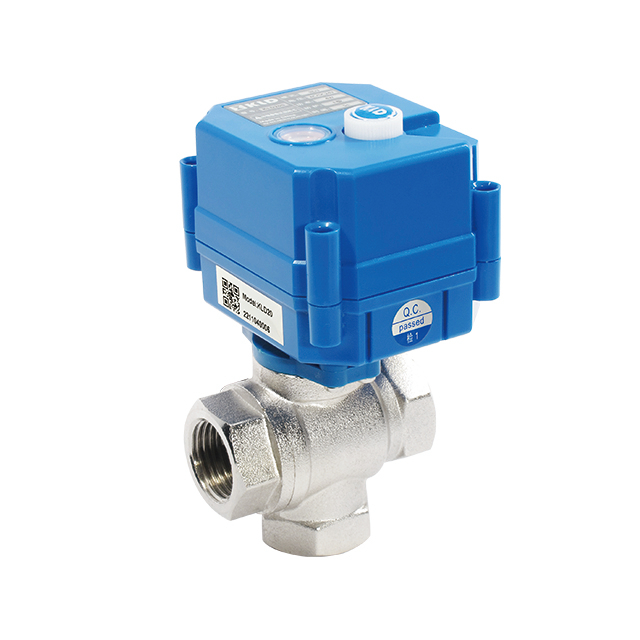
Correct piping is the foundation of using a 3-way valve properly. Each port must be clearly identified before installation begins. Most valves include markings such as A, B, and AB, or arrows indicating flow direction. These markings guide connection logic and prevent incorrect routing, which can lead to system failure or unstable flow behavior.
Connection requires careful alignment between system design and valve function. A mismatch between intended flow path and actual piping layout can cause reverse flow or pressure imbalance. KLD designs often include clear port labeling and compact structures, which help simplify installation in tight spaces.
Key connection steps:
Identify the common port (usually inlet or outlet depending on application)
Match remaining ports to system pipelines based on flow logic
Check flow direction indicators before tightening connections
Test valve rotation to confirm correct flow switching behavior
Common mistakes to avoid:
Connecting two outlets as inlets by mistake
Ignoring internal port configuration (L-port or T-port)
Skipping flow direction verification during installation
| Port Marking | Typical Role | Connection Example |
|---|---|---|
| AB / Common | Main inlet/outlet | Connected to pump or main line |
| A | Outlet / input 1 | Connected to first pipeline |
| B | Outlet / input 2 | Connected to second pipeline |
Installation orientation plays an important role in system performance. A 3-way valve can be installed vertically or horizontally, depending on space and equipment layout. Orientation affects not only physical fit but also long-term reliability and maintenance access.
In compact systems, horizontal installation is often preferred because it reduces height requirements and integrates easily into pipelines. Vertical installation, however, may improve drainage and reduce stress on certain components. KLD’s compact valve designs are specifically built to handle space-constrained installations, making them suitable for both orientations.
Factors to consider when choosing orientation:
Available installation space in the system
Accessibility for maintenance and manual override
Alignment with existing pipeline direction
Load distribution on valve body and actuator
Material selection directly impacts the performance and lifespan of a 3-way valve. Choosing the wrong material can lead to corrosion, leakage, or reduced efficiency. Different applications require different materials based on fluid type, temperature, and pressure.
KLD offers multiple material options, allowing better matching between valve and application environment. Plastic materials are often used for water systems, while stainless steel is preferred for industrial or high-pressure conditions.
Material selection considerations:
Type of fluid (water, chemicals, gas)
Operating temperature range
Pressure level within the system
Environmental exposure (corrosive or clean conditions)
| Material Type | Suitable Applications | Key Advantages |
|---|---|---|
| UPVC / Plastic | Water treatment, corrosion media | Lightweight, corrosion resistant |
| Stainless Steel | Industrial systems | Strong, durable, high temperature |
| Brass | General-purpose systems | Cost-effective, easy machining |
Control method determines how a 3-way valve operates within a system. Selection depends on whether manual control is sufficient or automation is required. Modern systems often rely on motorized valves for better precision and efficiency.
Manual operation uses a handle or lever to rotate the valve. This works for simple systems but lacks automation capability. Motorized control, on the other hand, allows integration into control systems using signals, timers, or sensors.
KLD integrates advanced actuator technologies such as brushless motors and long-life designs, supporting up to hundreds of thousands of cycles. This improves reliability in continuous operation environments.
Control options include:
Manual operation for basic applications
On/off motorized control for simple automation
Modulating control for precise flow adjustment
Sensor integration for pressure or flow-based control
Control selection considerations:
System complexity and automation level
Required precision of flow control
Need for remote operation or monitoring
Safety requirements such as fail-safe functions
A well-matched control method ensures stable operation and allows the 3-way valve to function effectively within automated systems.
Selecting the wrong internal configuration is one of the most common issues when using a 3-way valve. Many users confuse L-port and T-port designs, which leads to incorrect flow behavior in real applications. Each configuration controls flow differently, so choosing the wrong one can result in inefficient operation or even system failure.
A mismatch between valve design and system requirement often causes unexpected flow paths. For example, a system designed for switching may accidentally allow mixing if the wrong port type is used. This not only reduces efficiency but may also affect product quality or process stability.
Common configuration mistakes:
Selecting T-port when only switching is required
Using L-port in systems needing simultaneous flow paths
Ignoring internal flow path during valve selection
Impact on system performance:
Unintended mixing of fluids
Reduced control accuracy
Increased pressure loss or flow instability
| Port Type | Function Type | Typical Use Case | Risk if Misused |
|---|---|---|---|
| L-Port | Switching | Flow direction control | Cannot support mixing |
| T-Port | Diverting / Mixing | Distribution or blending | May cause unwanted flow transient cross-flow |
Incorrect piping direction is another frequent problem when installing a 3-way valve. Misconnection often happens when port markings are ignored or misunderstood. Once installed incorrectly, the system may show unstable flow, pressure imbalance, or complete malfunction.
Flow direction must always match the intended system design. Many valves include arrows or labels, but skipping verification during installation can lead to costly corrections later. Careful inspection during setup helps prevent these issues.
Typical misconnection issues:
Inlet and outlet ports reversed
Two outlets connected as inputs
Ignoring flow direction indicators
Troubleshooting flow problems:
Check port markings and system diagram
Verify valve position during operation
Observe flow behavior under different positions
Operating conditions play a critical role in the performance of a 3-way valve. Ignoring factors such as pressure, temperature, or fluid type can lead to premature failure or unsafe operation. Many issues arise when valves are selected based only on size, without considering environmental conditions.
Material incompatibility is a major risk. Certain fluids may corrode plastic or react with metal components. High temperatures or pressure levels can also exceed the valve’s design limits, reducing lifespan or causing leakage.
Key risks when conditions are ignored:
Seal damage due to temperature extremes
Valve body corrosion from incompatible media
Reduced performance under high pressure
Selection tips:
Match valve material to fluid characteristics
Verify temperature and pressure limits
Consider long-term operating environment
Control and safety features are often underestimated when selecting a 3-way valve. Basic functionality may seem sufficient, but real systems require additional protection and control capabilities. Ignoring these features can lead to operational risks or system downtime.
Modern motorized valves include options such as fail-safe positioning, manual override, and signal feedback. These features improve system reliability and allow better control in automated environments. KLD designs, for example, integrate long-life actuators and flexible control options, making them suitable for continuous operation.
Common oversights:
No fail-safe function during power loss
Lack of manual override for emergency situations
Missing feedback signals for monitoring
Why these features matter:
Fail-safe ensures safe valve position during shutdown
Manual override allows control when automation fails
Feedback signals improve system monitoring and diagnostics
Best practices:
Choose fail-safe options for critical systems
Ensure manual operation is available when needed
Integrate valve control with automation systems
Proper attention to control and safety features helps maintain stable operation and reduces the risk of unexpected failures.
Using a 3-way valve requires correct flow design and proper setup. Port type, direction, and material all affect performance and stability.KLD offers compact, long-life motorized valves with flexible control options, helping improve system efficiency and reliability in real applications.
A: A 3-way valve controls flow direction, switching or diverting fluid in systems.
A: A 3-way valve rotates an internal ball to connect different flow paths.
A: Select based on port type, material, pressure, and application needs.
A: Incorrect wiring, wrong port setup, or pressure mismatch may cause issues.
A: L-port switches flow paths, while T-port allows diverting or mixing.


