Views: 208 Author: Site Editor Publish Time: 2025-09-13 Origin: Site


In modern fluid control systems, automation plays a critical role in improving efficiency, accuracy, and safety.Nowadays, motorized ball valves are one of the most widely used automation valves.
These devices combine the simple yet effective design of a traditional ball valve with an electric motor actuator that automates the opening and closing process. From HVAC systems to water treatment plants and industrial process control, motorized ball valves are chosen for their reliability, precision, and adaptability.
This article will provide a detailed introduction to what motorized ball valves are and how they work, while also explaining their key features, advantages, applications, and considerations when selecting one. By the end, you’ll have a deep understanding of these valves and how they can be applied to your specific system.
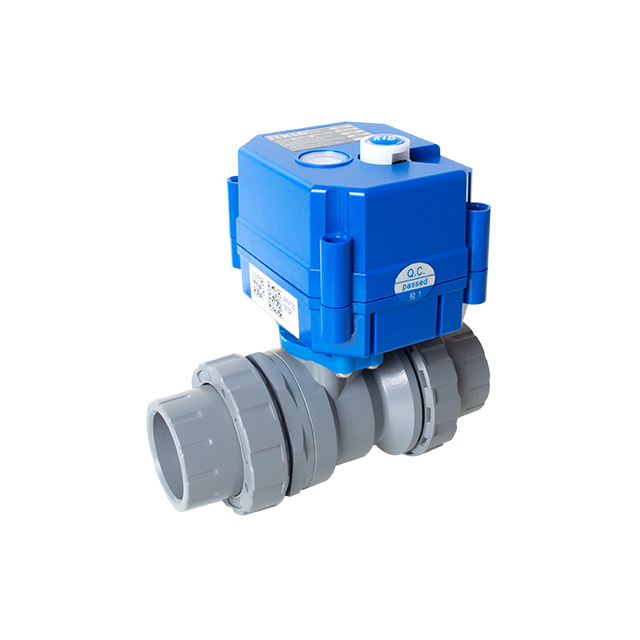
A motorized ball valve is a type of quarter-turn valve that uses an electric motor to rotate a ball with a hole through its center. When aligned with the pipeline, fluid flows freely; when rotated 90 degrees, the passage is blocked. Unlike manual ball valves, which require human intervention, motorized versions automate this process, enabling remote control, programmable logic integration, and precise timing.
Sometimes they are referred to as electric ball valves or actuated ball valves, and they typically consist of two main parts:
The ball valve body – where the flow is controlled.
The electric actuator – a motorized device mounted on top of the valve that provides automated rotation.
This combination creates a versatile solution for applications that require frequent or automated shutoff, flow switching, or system integration.

The operation of a motorized ball valve can be summarized in three stages: signal input, motor actuation, and valve position control.
Signal Input – An electrical signal (AC or DC, depending on design) is sent from a controller, switch, or sensor.
Motor Actuation – The motor inside the actuator converts electrical energy into mechanical torque, rotating the valve’s stem and ball.
Valve Positioning – Depending on the type, the valve may operate as:
On/Off (two-position): The ball is either fully open or fully closed.
Modulating (proportional control): The valve opens at varying degrees based on signal strength, allowing precise flow regulation.
A built-in gearbox often reduces motor speed while increasing torque, ensuring smooth operation and preventing damage to the valve seat. Some designs include limit switches to stop the motor once the desired position is reached.
Table: Comparison of On/Off Motorized Ball Valves vs. Modulating Motorized Ball Valves
| Feature | On/Off Motorized Ball Valve | Modulating Motorized Ball Valve |
| Function | Fully open or fully closed | Allows partial opening for flow control |
| Applications | Simple shutoff, safety systems | HVAC, dosing, irrigation systems |
| Control Signal | Simple power on/off | Analog (e.g., 0-10V, 4-20mA) |
| Cost | Lower | Higher |
To better understand how these valves function, let’s break down their essential components:
Valve Body: Usually made of brass, stainless steel, or PVC, depending on the medium being handled.
Ball and Seat: The precision-machined ball rotates within Teflon or elastomer seats for leak-tight sealing.
Stem: Connects the ball to the actuator.
Actuator Housing: Encases the electric motor, gears, and electronics.
Gearbox: Reduces motor speed while increasing torque.
Limit Switches or Sensors: Detect valve position and stop motor when limits are reached.
These components work in harmony to deliver reliable, automated flow control with minimal operator involvement.
Motorized ball valves offer multiple benefits compared to traditional manual or solenoid valves.
Automation and Remote Control – No manual intervention is needed; they can be controlled by sensors, timers, or building management systems.
Energy Efficiency – Once the valve reaches its position, most designs consume little to no power.
Durability – Ball valves inherently have low wear and excellent sealing performance.
Versatility – Available in a wide range of sizes, materials, and voltage options.
Precision Control – Modulating versions allow fine-tuned regulation.
Safety and Reliability – Ideal for emergency shutoff and hazardous environments.
Table:Comparison of On/Off Motorized Ball Valves vs Modulating Motorized Ball Valves
| Feature | Motorized Ball Valve | Solenoid Valve |
| Flow Control | On/Off or Modulating | Primarily On/Off |
| Energy Use | Low (after actuation) | Continuous power for holding open |
| Size Range | Small to large | Typically small |
| Media Compatibility | Wide (water, gas, chemicals) | More limited (clean fluids preferred) |
| Maintenance | Low | Moderate (coil wear possible) |
Motorized ball valves are widely adopted across industries due to their reliability and adaptability. Some key applications include:
HVAC Systems: For controlling chilled water, hot water, or glycol loops.
Water Treatment: Automated shutoff and flow switching in purification and distribution systems.
Irrigation: Remote or automated control for efficient water distribution.
Chemical Processing: Handling aggressive or corrosive fluids safely.
Food and Beverage: Hygienic-grade stainless-steel valves for process control.
Oil and Gas: Automated shutoff in pipelines and safety systems.
Their flexibility makes them suitable wherever automated fluid control is essential.

When selecting a motorized ball valve, several factors should be evaluated:
Material Compatibility – Match valve body material (brass, stainless steel, PVC) with the media.
Size and Flow Requirements – Ensure proper diameter for desired flow rate.
Voltage and Power Supply – Choose between AC (24V,110V, 220V) or DC (5V,12V, 24V)
Control Type – Decide between on/off or modulating operation.
Environment – Consider IP rating for outdoor or wet conditions.
Duty Cycle – For frequent operation, select actuators rated for continuous duty.
Example Selection Scenario:
For a greenhouse irrigation system, a 24V DC PVC motorized ball valve would be ideal due to corrosion resistance, low voltage safety, and automated integration with a moisture sensor system.
Motorized ball valves require relatively little maintenance, but regular inspection improves longevity.
Routine Checks: Inspect wiring, actuator housing, and valve seals periodically.
Lubrication: Most ball valves are self-lubricating, but check manufacturer guidance.
Cleaning: Remove debris or scale from valve seats if leakage occurs.
Testing: Cycle the valve occasionally to prevent sticking.
Troubleshooting Common Issues:
No responding → check power supply and wiring.
Slow actuation → possible low voltage or gearbox wear.
Leakage → inspect seals or replace valve seats.
By applying these practices, motorized ball valves can remain reliable for years with minimal intervention.
A motorized ball valve is more than just an automated shutoff device—it is a versatile and efficient solution for precise fluid control across multiple industries. By understanding what they are, how they work, and how to choose the right model, businesses and system designers can optimize performance, save energy, and enhance reliability. Whether used in HVAC, irrigation, or industrial automation, these valves continue to prove their value in modern engineering.
1. What is the main difference between a motorized ball valve and a solenoid valve?
A motorized ball valve uses an electric motor for actuation and can remain in position without consuming energy, while a solenoid valve relies on an electromagnetic coil and typically requires continuous power.
2. Can a motorized ball valve regulate flow, or is it only for on/off control?
Both options exist. Standard models provide on/off control, while modulating motorized ball valves allow precise flow regulation.
3. Are motorized ball valves suitable for outdoor use?
Yes, if the actuator has a proper IP rating for dust and water resistance. Always match the environment with the valve’s protection rating.
4. How long do motorized ball valves last?
With proper material selection and periodic maintenance, they can last for many years, often exceeding 50,000 cycles.
5. What power options are available for motorized ball valves?
They are commonly available in 12V DC, 24V DC, 24V AC,110V AC, and 220V AC versions, depending on system requirements.